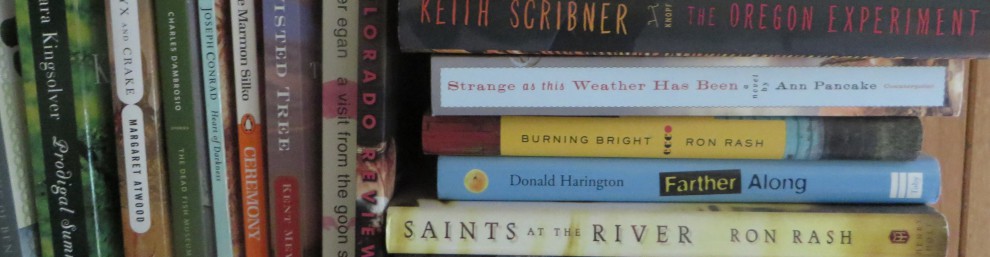
A running list of the books I’m reading, most recent titles at the top:
2026
- A Delusion of Satan: The Full Story of the Salem Witch Trials, by Frances Hill – This was the nonfiction choice for the book club I am in. I have some background on the subject, as my first unit as a student teacher way back in the day was The Crucible, by Arthur Miller, though Hill is quick to point out in her Introduction that Miller’s play took some liberties and isn’t entirely factual. This is a thorough account of what led up to the witch-hunts, how they went down, and what followed. In any opinion, it was maybe too thorough and could have been tightened up. I got lost with a lot of the village politics and generational histories that led up to the hysteria. I’ll also say that the book was just plain depressing. Not a lot of positives came out of this moment in history. The book is an exploration of the dark side of humanity with just a few glimmers of courage and integrity. I did find myself taken with the idea of trying to write my own historical fiction account. I’m not sure how much has been done since The Crucible. One minor figure I can see focusing on is Abigail Hobbs, a teenager described as the “wild girl of the woods” who first confessed to dancing alone in the forest, which was scandalous in Puritan society, and then confessed to being a witch and consorting with the devil, while also accusing others of witchcraft, including those in power. There is a lot going on there that would be fun to explore in historical fiction.
- A Voyage for Madmen, by Peter Nichols – This is a nonfiction book about the original Golden Globe race, which was a solo sailing race around the world in 1968. The sailors left from Great Britain and were not allowed to be resupplied. They had to cross the 40 degree south latitude line, sailing south of South America and Africa in some of the roughest waters in the world, and this was before the use of GPS technology. These guys were navigating with sextants and the stars. Nine men set out to do it and only one finished. One didn’t know how to sail when he started. One didn’t survive. One could have won but instead just kept sailing instead of returning to Great Britain. One couldn’t live with his failure and eventually committed suicide. This was a fascinating book. A lot of the sailing jargon flew went over my head, but Nichols does a good job of personalizing each of the sailor’s journeys against the broader context of the race. I have had dreams of sailing, but this was kind of a wake up call about the dangers involved. If I ever do sail, I’ll stick to calmer, warmer waters.
- The Sterile Rooms, by B. Scott – This science fiction novel was written by one of my best friends from college! It’s got a cool premise: a mysterious plague in the future is wiping out humanity, and the only hope might be in the blood of people who were cryogenically frozen before the die-off started. The story is big in scope, with alternating points of view, and it is a testament to the writing that I – a reader who gravitates to nature-themed literature – was riveted by the primary setting of an underground bunker. The characters are well rounded, with antagonists as likable as the protagonists, and there was great balance of action, suspense, and humor throughout. I really liked this book, and I’m not just saying that because Scott is my old school homie!
- The Berry Pickers, by Amanda Peters – I read this novel for the book club at my school, and I look forward to discussing it this week. The story is told in alternating sections from the point of view of a brother and sister, members of the Mi’kmaq tribe of northeast Canada, each dealing with the fallout of a family tragedy in which a young child went missing. I like how Peters plays with time, seamlessly working flashbacks into the narrative. One of the things I plan to ask about at the book club is the prologue, which gives away information that I feel lessens the potential for suspense, but I definitely found myself turning the pages faster as I got closer to the ending.
- Vigil, by George Saunders – I did not read this novel because Saunders is in the book I just read (below). I read it because it just came out and Saunders is one of my favorite living writers. My expectations for new fiction from Saunders are so high that it’s really not fair to him. I consider his short story collection, Tenth of December, to be the most influential book that I’ve read in the last thirty or so years. Which makes writing a review of anything he writes now kind of tricky. I’ll just say that this novel is pure Saunders: inventive, creative, and good-hearted. Like his last novel, Lincoln in the Bardo, Saunders walks the line between our world and the afterlife. As for which one I like better, I’d have to go with Lincoln in the Bardo, which came with more gravitas and emotional depth. I would also rank Tenth of December above his follow up short story collection, Liberation Day, but whatever. As far as I’m concerned, all four of these books are must-reads.
- Where the Deer and the Antelope Play: The Pastoral Observations of One Ignorant American Who Loves to Walk Outside, by Nick Offerman – This book caught my attention because part of it involves a hiking trip that Offerman took with his friends Jeff Tweedy, from the band Wilco, and George Saunders, one of my favorite living writers. It’s a hoot following the three of them through Glacier National Park. The other two parts of the book include Offerman hanging out with a farming family in England and pulling an Airstream trailer across the USA with his wife, the actress Megan Mulally, which is also a hoot. The book centers on our use of the land and how to be responsible about it, which is serious stuff, but Offerman keeps it light and snappy, with plenty of zingers and self-deprecation. I’d read more of his books.
- Riverman: An American Odyssey, by Ben McGrath – As much as I enjoy walking journeys, I’ve also been intrigued by ones undertaken on water. Like many, I’ve imagined floating down the Mississippi like Huck and Jim. I’m super excited for the upcoming movie version of The Odyssey. Ben McGrath’s odyssey is more of a research journey as he attempts to learn all he can about a long-distance canoeist named Dick Conant, who McGrath met near his house on the Hudson River when Conant was on a float from the Canadian border to Florida. Conant was a larger than life figure, a kind of modern American folk hero, whose abandoned canoe was discovered months later in North Carolina under mysterious circumstances. It’s an intriguing read, though I don’t know that I needed as much of a deep dive into Conant’s entire life as McGrath delivers. It’s almost too much research, and I might have liked a little more adventure. I doubt I’ll ever float the industrialized Mississippi, but I’ve been thinking about getting a kayak at some point and floating the Willamette, perhaps covering the 100 miles from Eugene to Portland.
- The Unseen, by Roy Jacobsen – I give myself props on a couple levels for reading this novel. First, it was written in Norwegian, and I rarely read translations. I know this is snooty and I’m missing out on a lot of awesome world literature, and maybe someday I’ll get over it, but I am always hesitant to be one writer removed from the person telling the story. I don’t quite trust it. Also, I almost gave up on the book halfway through. It was recommended by friends, and I didn’t want to leave them hanging. It’s about a family who lives on a Norwegian island in the early 1900’s, and to be honest, I was feeling a little stuck on the island. Not much was happening beyond them eking out their hardscrabble life at the mercies of the ocean, their land, and the unpredictable weather. But the second half was better, when things did start happening, and I’m glad I pushed through. My friends were also talking up the two sequels that make up the trilogy, but I don’t think I’ll read the next book, White Shadow.
2025
- Blue Mind: The Surprising Science That Shows How Being Near, In, On, or Under Water Can Make You Happier, Healthier, More Connected, and Better at What You Do, by Wallace J. Nichols – Well, that has to be the longest title and subtitle on this blog, and that pretty much covers the book. Nichols was a marine biologist who defends all those claims with study after study that bears them out. Simply put, as a species, we evolved with a dependence on water in all its manifest forms, and we still need them to thrive. I don’t know that there was anything especially eye-opening revealed for me while reading the book; it more confirmed what I already knew, both consciously and subconsciously. I appreciated Nichols’ suggestions on how to integrate water more into our daily lives, whether it be adding images of oceans, lakes, and rivers to our work and living spaces or listening to the sound of running water. I plan to get a little fountain for my work office, and I have ideas for some photography projects.
- Leave Only Footprints: My Acadia-To-Zion Journey Through Every National Park, by Conor Knighton – I’m jealous. Knighton is a freelance journalist who had done some work for the CBS Sunday Morning show, and when he noticed that the 100th anniversary of the National Park Service was approaching, he pitched the idea to visit every park that year and send in dispatches. CBS agreed, and he was off. Knighton was also coming off a huge break up with his fiancé, so this offered him a way to come to terms with that. I like how he structures the book not chronologically but thematically, with chapters like “Water,” “Animals,” and “People.” He’s a pretty good writer and humble and likable enough to make the book an engaging read throughout. I learned a little about some of the parks that weren’t totally on my radar. I also like how he didn’t try to do too much. This is ultimately his story, and he did a nice job not getting bogged down in too much history and extraneous information. The book also includes color pictures to help visualize some of the locations, and who doesn’t like a book with good pictures?
- Stoner, by John Williams – First of all, this novel isn’t about a pothead, and secondly, the author is not the guy who composes movie soundtracks. This John Williams wrote a handful of novels in the mid-twentieth century, one of which (Augustus), won the National Book Award. Stoner had a resurgence when it was republished in this century. It was recommended by a friend a few months ago, and it was the first book chosen by the staff of my school for a new book club. I really liked it. It’s pretty slow reading, kind of depressing, a deep dive into one man’s life, and for the most part, it’s a pretty quiet life. Maybe I relate because I lead a pretty quiet life, and like the protagonist, William Stoner, I am an English teacher, committed to my students and able to find deep pleasure in the academic pursuits of my own reading and writing. Most of the people in my book club did not like Stoner. Some of them downright hated it, putting the very existence of our new book club in jeopardy! They either didn’t get what the book was trying to do, they didn’t like or empathize with the protagonist, and/or they were offended by the victimization of the female characters. Looks like the next book we choose is going to be livelier, happier, and written by a woman, which is all fine by me! Stay tuned.
- So Far Gone, by Jess Walter – I am a big fan of Jess Walter, so I was bummed when a couple of friends whose literary opinions I trust said that this wasn’t Walter’s finest work (see The Cold Millions or Beautiful Ruins). I kind of let this book go, not wanting to be disappointed, but then a third friend recommended it. Enough was enough; I had to see for myself, and I can see where both sides are coming from. There is a lightness to this novel; it lacks the gravitas of the books mentioned above, which my first pair of friends was missing. Walter almost always imbues his fiction with humor, but here it approaches slapstick proportions, and the target is far-right Christian nationalism, which I know appealed to my third friend. Walter started his career as a crime beat newspaper reporter, and this book is an homage to that. There are quirky characters and a fast-moving plot line, but also poignant moments and some clever narrative techniques. I plowed right through it, and I am fine with Walter taking a break from high-minded literary aspirations to write something fun. I’m glad my third friend spoke up. It will be interesting to see what Walter does next. Whatever I hear about it, I will read it!
- Martin Marten, by Brian Doyle – This was recommended by the librarian I work with, and it had also been recommended multiple times by a friend years ago. Cue a connection to a story idea that I recently had, and it was time for me to read this book about two characters coming of age on Mount Hood – a boy entering high school and a young marten (Martin) leaving the safety of his mother’s care. I give Doyle big props for his understanding of the natural world and how deeply he delves into Martin’s life, as well as the lives of many other animals on the mountain, and his ability to convey their wild existence with sharp, lyrical prose. These were the elements that connect to my story idea, and I found that really valuable. Unfortunately, the overall tone of the book is super cutesy as Doyle breaks the fourth wall and addresses the reader directly, much like Lemony Snicket does in A Series of Unfortunate Events, which I absolutely hated and couldn’t finish. Same here. I had to skip through the last third of the book because it bugged me so much. I’ve rarely been so divided on a book, finding some of it really great while also hating it. My friend is encouraging me to not give up on Doyle, so I will give him another try, either another novel or one of his essay collections.
- Fahrenheit 451, by Ray Bradbury – I read this way back when, in high school or college, but I had pretty much forgotten what happened in it. My son is reading it for his English class so I wanted to join him. I’ve always loved Bradbury and considered him a master storyteller. The only thing I remembered from this one is that books burn at 451 degrees Fahrenheit, and the main character is a fireman who burns books in a dystopian future in which free thinking has been eradicated. I always enjoy stories about stories, and that’s what this is. Props to Bradbury for his predictions from 75 years ago that have come to pass – the dumbing down of society and the prevalence of screens we can immerse ourselves in to distract ourselves from what is important – human relationships, informed thought, and connections with nature. At times, the writing does feel a little dated as Bradbury goes on some long-winded poetic tangents, but there is plenty of action and things happening to keep reluctant readers like my son engaged. Hopefully he will finish it and we can discuss it!
- West, by Carys Davies – I’d been looking forward to this book for awhile. It was hard to find used or in the library, which is usually a good sign. I had really enjoyed her novel Clear, and this one looked right up my alley. In the years between the Lewis and Clark expedition and the Louisiana Purchase, a widower in Pennsylvania named Cy Bellman learns about the bones of mastodons or mammoths discovered in Kentucky and becomes obsessed with traveling west to encounter the mysterious creatures. Bellman leaves his young daughter behind with his cold sister, and the narrative mainly alternates between him and his daughter, who must come of age without his protection. A third fascinating character is the young Native American man, Old Woman from a Distance, who ends up accompanying Bellman on his journey. Davies’ writing is straightforward, spare, and engaging, reminding me of Denis Johnson’s Train Dreams. The scale of the story is huge, but there is an intimacy about it. Big things happen, and the ending is very satisfying. I can’t wait to read more of Davies’ books.
- Desert Sojourn: A Woman’s Forty Days and Nights Alone, by Debi Holmes-Binney – With all my interest in memoirs about walking journeys, I thought it would be cool to read one about someone who seeks solitude in nature but doesn’t plan to go anywhere. As with the long walks, I have also fantasized about this: extended time alone in a wild place. Holmes-Binney lands in her long-term camp after disillusionment with her marriage and life, a kind of midlife crises. She gets help from her boyfriend, Jerry Ellis, who wrote a book I really enjoyed called Walking the Trail, about retracing the Trail of Tears. She also gets help from a local ranger and his wife, who basically save her when she finds herself unprepared for winter weather, so it’s not a true solo sojourn, but that’s kind of where Holmes-Binney ultimately lands – we have to be independent in life, but we also have to be ready to ask and receive help when we need it. We are social creatures, but we also need time alone. It’s all about balance.
- Wandering Home: A Long Walk Across America’s Most Hopeful Landscape, by Bill McKibben – This book has the feel of another memoir I really enjoyed, American Ramble: A Walk of Memory and Renewal, by Neil King Jr. Both books feature older guys walking through familiar Northeast landscapes, having conversations with folks along the way about the state of the land and the people on it. King Jr.’s story is a little more adventurous and spontaneous. He walks with an open mind to both sides of our political divide. McKibben is an environmentalist with a clear agenda, so there is less dramatic tension. Fortunately for me as a reader, I agree with his main point, that the land can be both preserved as wilderness and as a place where people can farm and practice forestry responsibly. He illustrates multiple examples in his interactions with locals along the way. Unfortunately for the story, these meetings were all pre-arranged, and so we lose some of the wonder and awe that King encounters on his long walk. McKibben is a smooth writer, though, and his vivid descriptions have made me curious to someday explore the vast Adirondack wilderness and the pastoral communities surrounding it.
- Ricochet River, by Robin Cody – Here’s a YA novel that I can’t believe I had never read. Published in the early 90’s and set in the early 60’s, it’s a coming of age story about three kids in a rural Oregon logging town. It’s like Stand By Me mixed with a little bit of Huck Finn. Wade is a well-off white kid who is content living small town life – fishing, hunting, and excelling at sports – until he starts seeing the world through the eyes of his impoverished girlfriend, Lorna, who is desperate to leave, and the new kid in town, Jesse, who is Native American and arrives with an aura of trouble. The writing is straightforward and accessible, and the story feels relevant and timely, even with the removed setting. I loved this book and hope both of my kids will read it. I think every kid growing up in Oregon should read it.
- The Underground Railroad, by Colson Whitehead – This novel offers an alternate history with a wild premise: what if the Underground Railroad was actually an underground railroad? I had heard great things about this book, which was turned into an award-winning 10-episode Amazon series, but the suspension of disbelief regarding the premise slowed me down. Then I found myself recommending James, by Percival Everett, to a friend, and I remembered how that novel also demands significant suspension of disbelief. Both books tackle the horrors of slavery while also reimagining it. Each include moments of empowerment embedded in perpetual suffering. The Underground Railroad features complex characters, nonlinear storytelling, and moments of revelation that illustrate how destructive the institution of slavery was to white people as well black people. I’m glad I finally read it, and I look forward to checking out the Amazon series and reading more by Whitehead.
- The Terranauts, by T.C. Boyle – This novel is based on the Biosphere experiments that happened in Arizona in the 80’s and 90’s. I remember being fascinated by the project back in the day, but then it kind of fizzled out because things didn’t go right. And then there was a silly movie with Pauly Shore. So it only makes sense that Boyle would have fun with the whole thing. Put four women and four men in an enclosed system for two years with nothing going in and nothing going out – what could go wrong? Plenty, obviously. I enjoyed the book but maybe not as much as other works by Boyle. I thought the 528 pages were too many and the middle could be trimmed by about 100 pages. At times the story was predictable, though there were twists toward the end that I didn’t see coming. Maybe my biggest issue was that it wasn’t as funny as most of Boyle’s work. I thought there were opportunities for humor that he didn’t pursue, which kind of surprised me.
- Braving It: A Father, a Daughter, and an Unforgettable Journey into the Alaskan Wild, by James Campbell – When I’m in the library getting hiking guide books for the Alaska trips I take with my son, I usually end up seeing something like this on the shelf that I grab. This one had obvious resonance, with my son being 15, the same age as the author’s daughter when they go on their adventures. I took the book to Alaska with us but was mostly too busy or too tired to read much there. It was nice to finish it back in Oregon with Alaska still on my mind. Campbell and his daughter are way more hardcore than my son and me. We pretty much just fish and stay in furnished cabins in the summer when the weather is relatively nice. Over three separate trips, Campbell and his daughter help his cousin and wife build a remote cabin, trap with them in the winter, and go on an epic backpacking and canoe trip with two friends. I wouldn’t change the trips I’ve taken with my son, and I’m sure Campbell wouldn’t change his either.
- Bloodchild, by Octavia Butler – Butler’s 1993 science fiction novel Parable of the Sower kept coming up because of how it prophesied much of what has been been happening in California with wildfires stemming from climate change and social justice movements, but I couldn’t find it anywhere in town. So I read this collection of stories. I had never read Butler, a pioneering Black woman in a science fiction world dominated by white men, and she is a heavy hitter. These stories are far out, from aliens that plant their seeds in human men to a post apocalyptic world in which people have lost the ability to speak, Butler goes all in and doesn’t pull any punches. I also enjoyed the two bonus essays focused on the craft of writing, and I definitely plan to read Parable of the Sower.
- Black Sun, by Edward Abbey – This came up in a conversation with a colleague, whose friend blasted the book for its inappropriate sexual dynamics. I couldn’t remember if I had read it before (one reason I started doing this blog in 2014!) and I still couldn’t remember after a few chapters in. I kind of started skipping ahead and then realized I hadn’t read it. I see where my friend’s friend is coming from. There is some big time male sexual fantasizing going on – a 37 year-old man has a steamy relationship with a 19 year-old girl – but without giving too much away, I told my friend that I was at least happy that the man, and his friend who is way worse than him, both come out looking like losers. Abbey is a bit heavy handed with his relationship writing – I recall feeling the same way about The Monkey Wrench Gang – but he’s spot on with the nature stuff, which is why I read him.
- Grayson, by Lynne Cox – This is one of those examples of the story being better than the writing. It’s a memoir Cox wrote about when she was 17 and training for her long distance swimming off the coast of Los Angeles when she encountered a juvenile grey whale separated from its mother. Cox decides to stay with the whale, despite her own exhaustion and fears. Local fisherman and lifeguards help the cause, and along the way Cox observes all kinds of other ocean life she maybe hadn’t noticed before. The ending is predictable. Cox has had an epic long distance swimming career – I had heard of her exploits – but I’m not inclined to read any of her other books.
- Fever House, by Keith Rosson – This is a fun horror novel by a Portland author, set in Portland. It’s part Pulp Fiction, part The Walking Dead, and part The X-Files. It’s got leg-breakers, rock and rollers, men in black, and occultists, all crescendoing in a nightmare scenario for downtown Portland, and presumably, the world at large. There is a sequel/companion novel, The Devil by Name, that I definitely plan to read.
- How to Say Babylon, by Safiya Sinclair – One of my students read this memoir and enjoyed it, and I was intrigued by the story: a girl from Jamaica raised under the strict tenets of Rastafarianism. I’ve been to Jamaica a few times and it is one of my favorite places on earth, but reading this taught me a lot about the island, its history, and its people. This book has a lot of similarities to a memoir I’ve taught, The Glass Castle, by Jeannette Walls. We follow both protagonists from early childhood into their twenties, both have domineering and abusive fathers that they adore until they are disappointed one too many times, and both young women embody perseverance and self-determination, ultimately finding salvation in their writing. Walls was a journalist, Sinclair a poet, and I look forward to reading her book of poetry, Cannibal.
- Desert Solitaire, by Edward Abbey – This is one of those books that I can’t believe I hadn’t read yet. I’m honestly not sure what took me so long. Maybe the desert has never really pulled me in? But spend enough winters in the Pacific Northwest and the appeal starts to grow. I do plan to spend time down in Abbey’s Utah canyon country. Though the country that Abbey describes probably doesn’t exist anymore, which is actually a main premise of the book. He describes the commodification of nature happening right before his eyes as Arches National Monument (now a national park) gets progressively more developed during his time there. The biggest section of the book is a rafting trip that he and a friend take down the Colorado River before it is flooded during the construction of the Glen Canyon Dam, which Abbey’s characters famously destroy in his novel The Monkey Wrench Gang. In some ways, Abbey’s writing hasn’t aged well – there is a lot of macho white man posturing – but in others it is just as vital as ever in its appeal to get out of our cars, get out into the wilderness, and realize the importance of preserving what little of it we have left.
- The Wild Muir, by John Muir – This is a collection of some of John Muir’s shorter writings that feature him getting in all kinds of escapades in nature. It is a mix of journal entries, letters, and published pieces. In short, Muir is a badass. We all know him as the founder of the Sierra Club, one of our first conservationists, and the work he did on that front is enough to celebrate him. But these writings show us why that passion to preserve the wild was there in the first place: he loved getting out there. The dude would load his pack with some bread and tea and go on these epic multi-day adventures in all kinds of crazy conditions – traversing glaciers, summiting peaks, weathering storms, encountering wildlife, navigating avalanches – all with minimal gear and limited support. It’s a wonder that he lived as long as he did considering how often he put his life at risk. Go Muir!
- Clear, by Carys Davies – The cover of this novel caught my eye: a giant wave about to crash down on a rocky shore. The premise sealed the deal: a struggling Scottish minister accepts the job of evicting the last resident of an isolated island. What could go wrong? A third main character is the minister’s wife, who goes looking for him after sensing that something has in fact gone wrong. Davies does some cool things with language, seeing as Ivar, the hermit, speaks in a tongue that exists no where else. This novel surprised me in multiple ways, making me eager to read another novel by Davies: West.
- Travels with Charley: In Search of America, by John Steinbeck – I used to hear about this book a lot, like before the internet even, so it has been on my radar for a long time. Having just read The Pearl and being interested in travel stories, I figured it was time to read this nonfiction narrative about Steinbeck driving a 10,000 mile loop around the country with his dog in 1960. Props to Steinbeck for taking this on at the age of 60 after being diagnosed with a heart condition, and for leaving his comfortable New York life for life on the road. He reminds me of the poet Basho, who was a comfortable success in Tokyo in the 1600’s and left that behind to travel by foot in the cardinal directions in search of haiku. Steinbeck makes a lot of comparisons to travelers in older times, highlighting how easy he has it due to modern conveniences. He criticizes some of these conveniences – like the highway system, radio, and supermarkets – for homogenizing America. He predicted it would only get worse, and of course, it has. Steinbeck has a good sense of humor that helps us enjoy the ride with him. Occasionally he gets a little puffy-chested and macho, but there are heartfelt moments and an intense climax where he confronts racism in the South.
- The Pearl, by John Steinbeck – I’ve been trying to encourage my son to read more, so I thought of this novel when looking for something short, classic, and connected to fishing. (I already read The Old Man and the Sea to him years ago and he remembers it so well that he doesn’t want to read it on his own.) I think I read The Pearl in middle school. I remembered the very ending but not much else, so when my son shrugged it off, I started reading. It’s kind of about fishing, regarding Kino being a pearl diver. Kino is poor and just trying to provide for his wife and infant son, so when he finds a giant pearl, the Pearl of the World, he assumes that all of his dreams will come true. But Steinbeck, of course, has other plans. As with so much of his work, he explores social class divisions and the corrupting influence of wealth.
- The Panther and the Lash: Poems of Our Times, by Langston Hughes – After struggling through Reeves, I picked up Hughes as a kind of companion book, another Black man writing about the Black experience in America. I knew this would be a better fit, having read and studied Hughes in the past. His work is more on the surface, still tackling extremely complex issues and emotions, but doing so in accessible language. I didn’t realize it as I read it, but this collection, published in 1965, was the last one that Hughes would publish in his lifetime. It included some of his older poems as well as new ones, and I don’t think I realized that his career stretched so far beyond the Harlem Renaissance of the 1920’s. Walt Whitman is probably my favorite poet, with his work also very much on the surface, and I enjoy his long lines of free verse, but I also really enjoy Hughes’s concise rhyming poems. He is able to say so much with so little.
- Best Barbarian, by Roger Reeves – This is a book of poetry I picked up in our school library when my Creative Writing classes were browsing for poetry books to read independently. Our librarian put this one in a display with other award winners, and when no students snagged it, I did. It’s good – great – obviously, but I’ll confess here, if I haven’t already in this blog, that I’m not much of a casual reader of poetry. Then again, is anybody? What I mean is that reading poetry requires effort, unless it is really simplistic stuff. You have to slow down, re-read the poem multiple times, perhaps research any allusions you aren’t familiar with, and then pause and give it some thought. But I guess I wasn’t in that kind of mood (I guess I’m just not that kind of reader?) and I just kind of plowed through the book, poem after poem, just kind of taking it all in. And this is not simplistic stuff. Reeves writes about the Black experience in America, tapping into history, his own experience as a father, and where we are right now as a society. The same poem might have allusions to classical literature and social media, everything from “Gilgamesh and the Aeneid to Drake and Beyonce,” as the book jacket says. This book deserves to be read again, and then again, and maybe – hopefully – at some point I will, but for now I will be content to have taken it all in.
- Cape Cod, by Henry David Thoreau – After recently reading a biography of Thoreau (below) I was eager to get back to reading some of his work, something I hadn’t read before, and when I took a recent walking trip along the beach in San Francisco, this book seemed like it would be a good companion. Unfortunately, I was too busy walking, taking in the sights, and planning out the next day’s walk to do much reading. But when I returned home, already missing the sand and surf, it was nice to join Thoreau and his unnamed companion on their walks along Cape Cod. This book is lighter than most of the Thoreau I’ve read, like Walden and his essays. It is a kind of travelogue, with him cracking jokes and observing life along the Cape: the deadly shipwrecks and the “wreckers” who scavenge what washes ashore, the fishermen and their families, and the constantly changing landscape of the sand dunes and intertidal zone. Unfortunately, Thoreau takes a lot of historical tangents, quoting at length the texts of books from previous centuries, and I’ll confess that I found my eyes glazing over and needing to skim some of these sections. The book is at its best when Thoreau observes his immediate surroundings. I’ll also say that the structure of the book would have benefitted if he did what he did with Walden – condense two years of living in his cabin into a one-year narrative. Thoreau visited Cape Cod three times in his lifetime, and he jumbles these visits up in a way that can be disorienting. I think the book would have read better if it was presented as the narrative of a single walk from one end of the cape to the other. But of course, Walden wasn’t exactly a big hit in Thoreau’s lifetime, so who’s to blame him for trying something different? One last thing to note was how casually Thoreau describes the slaughter of sea life like pilot whales and mackerel by the local fisherman. Huge fleets are harvesting as much as they can in an obviously unsustainable way, and Thoreau doesn’t bat an eye. It’s interesting to see how someone so environmentally progressive still saw the ocean as some kind of limitless bounty in the 1860’s.
- Talk to Me, by T.C. Boyle – It’s been awhile since I’ve read T.C. Boyle. I got the notion because of a novel idea I have, knowing its style would need to be loose and fun. Originally I was thinking Tom Robbins, but that might be too loose. Boyle seemed about right, and when I browsed his books in the library, I was surprised – though I shouldn’t have been – by how many engaging new titles he’s dropped in the last decade. I will probably read a few more of his novels in the next year or so, but the one that most captured my interest was this one, based on early attempts to communicate with chimpanzees. A chimpanzee, Sam, is one of the main characters, and he gets his own POV sections, which is one of the highlights. Another is that loose and fun style. Boyle hasn’t lost it. And what he has gained is more heart. I really liked Sam and the protagonist, Aimee, and found myself really feeling for them as the book ramped up to its climax.
- The Sisters Brothers, by Patrick deWitt – I’ve been told to read deWitt, from Portland, for years, and I’m glad I finally came around because this book was great. It is set in the 1850’s, between Portland and San Francisco, and deWitt nails it. He has great command of the type of language used back in the day but writes it in a way that is accessible to modern readers. The protagonists are brothers who work as hired assassins, and one of them is questioning their line of work. There is dark humor throughout, balanced with emotional weight. This is one of those books that I raced through toward the end and literally couldn’t put down even though a part of me wanted to slow down and savor the story. There is a movie version with a great cast that I plan to watch, but something tells me it will pale in comparison to the book. I look forward to reading more deWitt.
- The Thoreau You Don’t Know: What the Prophet of Environmentalism Really Meant, by Robert Sullivan – I picked up this work of literary analysis from the discard shelf of my school library. It would definitely have been a dry read for most students – only two had ever checked it out – but I enjoyed it because I enjoy all things Thoreau. Most of the material here was familiar to me, but I appreciated the overall angle Sullivan takes: Thoreau was not a cranky hermit trying to close himself off from the civilized world by embracing the natural world but rather a concerned citizen very much connected to his local community who wanted to help his neighbors see the value in the nature that surrounded them, not just in the deep woods but in their own gardens and orchards. Go Thoreau!
- Arcadia, by Lauren Groff – This is Groff’s second novel, and the last of her five for me to read. Given that it centers around a hippie commune, I figured going into it that it would be the lightest of her five novels, and it probably is, which might be why I was caught off guard by the emotional depth of the book, which I shouldn’t have been, given how much I admire Groff’s writing. As with The Monsters of Templeton and Fates and Furies, she takes big swings with the narrative structure, following the protagonist, Bit, through different, distinct phases of his life. Before the last section, I predicted how the book would end, and to Groff’s credit, I was wrong. Her ending was way better than mine.
- The Monsters of Templeton, by Lauren Groff – After reading the short stories selected by Groff (below), I had to read one of her own stories. This is her first novel, set in a fictionalized version of her hometown, Cooperstown, NY. While this isn’t my favorite Groff novel, it’s still awesome and a lot of fun, probably lighter than any of her others I’ve read. (I only have one to go, Arcadia, and that may challenge for most light.) The book has quirky characters, both historical and in the present, and interesting supernatural elements. The corpse of a lake monster appears in the first sentence. The one thing I struggled with was the protagonist’s complicated family lineage, which may have been the point since she is also struggling with it. Groff is really good at writing historical fiction (see Matrix and The Vaster Wilds below) because of how realistically she describes her character’s experiences. Though times and eras may change, humans are still humans, and her historical characters feel every bit as alive as her contemporary characters.
- The Best American Short Stories 2024, edited by Lauren Groff – I’m always excited when an author I like is the guest editor, and Groff delivers. This was probably one of the strongest batches of stories in recent memory. The top pick for me was “Mall of America” by Suzanne Wang, and somehow, this appears to be the fist story she has published. The narrator is the AI system of a near-future shopping mall, defending its interactions with a customer. With shades of George Saunders, Black Mirror, and Kazuo Ishiguro’s Klara and the Sun, this story was right up my alley, and I look forward to keeping an eye on Wang. Another near-future standout was “Democracy in America” by Allegra Hyde, in which young people can undergo a “consignment” procedure to transfer their good looks to old people willing to pay good money. On the flip-side of near future fiction was a great historical story, “Privelege,” by Jim Shepherd, based on the Johnstown Flood of 1889, which killed thousands in Pennsylvania when a dam breached as a result of the greed of the elite. It is as action-packed of a short story as I have ever read. Of the stories with contemporary settings, my favorite was “Seeing Through Maps,” by Madeline Ffitch, about an estranged couple living as neighbors in the woods, forced to deal with each other when the man nearly cuts a finger off with a hatchet. Honorable mentions go to “Viola in Midwinter,” about vampires, “The Happiest Day of Your Life,” about a guy getting progressively more drunk at a wedding, “A Case Study,” about a therapy patient getting contacted years later by his therapist, and “Baboons,” with settings ranging from an American inner city homeless encampment to an African safari.
- James, by Percival Everett – This is a retelling of Mark Twain’s The Adventures of Huckleberry Finn from the point of view of Jim, who thinks of himself as James. The novel won the National Book Award, deservingly. Everett simultaneously stays true to the spirit of the classic book while also taking some serious liberties. It is a bold approach. Like Twain, Everett uses humor to illuminate injustice. I had a few laugh-out-loud moments while reading, while some scenes contain gut-wrenching depictions of slavery that are difficult to read. At the heart of this version, like the original, is the relationship between Huck and James, and it was a pleasure to be along for the ride with them again. I would love to teach the two books simultaneously some day; I’m sure that will happen, if it hasn’t already, in high school and college English classrooms across the country.
2024
- Trespassing Across America: One Man’s Epic, Never Done Before (and Sort of Illegal) Hike Across the Heartland, by Ken Ilgunas – The title definitely got my attention, as well as the cover, which shows Ilgunas walking on a pipeline. The purpose of his 1700-mile walk was to track the proposed pathway of the Keystone XL pipeline from its origins in the tar sands of Alberta, Canada to an oil refinery on the gulf coast of Texas. Big props to Ilgunas for even attempting this after his partner dropped out at the last minute and he broke his little toe, which delayed the trip so he would be walking across the Great Plains in winter. And he actually did it. Like American Ramble (below), Ilgunas does a good job of engaging with people from both sides of the political divide and looking for common ground. Obama said no to the pipeline, Trump said yes, Biden said no, and we’ll see what happens when Trump is back in office.
- Murder on the Orient Express, by Agathie Christie – I went through an Agatha Christie phase way back in the day, maybe when I was a teenager missing the Hardy Boys books I had grown up with. I read pretty much all of her most popular titles, including this one, and I must have liked them to keep reading them, but I will not be reading any more this time around. I re-read this one (without remembering who done it) because it is on the list of books my school district adopted for me to teach this year. I let my students vote on what to read from these options I am given, and to be honest, I hope they don’t vote for this novel. It was drudgery to read, most of the clues flew way over my head, and having been published in the 1930’s, I found it dated and irrelevant. By the end, I didn’t care who done it; I just wanted to get it over with.
- The Angel of Rome and Other Stories, by Jess Walter – Like Ron Rash (below) I will pretty much read everything Jess Walter publishes. His writing has humor and heart. I think every story in this collection had a moment that made me smile or chuckle. Walter’s characters are always up against it, almost always legitimate victims of something or other, but they scrap back and stay true to themselves, even when they get in their own way. Like his novel Beautiful Ruins, the title story and another, “Famous Actor” (which appeared in The Best American Short Stories 2017), feature regular people who form relationships with famous people, which is always fun. But Walter is at his best when he writes about regular people dealing with the kinds of things we regular people deal with all the time. His well-rounded stories have fun with these situations, like episodes of Seinfeld, but then they go deeper, making us care about these characters as we celebrate their small victories.
- The Caretaker, by Ron Rash – Reading any new book by Ron Rash has become a no-brainer for me, and this novel is one of my favorites by him. The title character, Blackburn, is the caretaker of a cemetery in a small North Carolina town during the Korean War. When his best friend, Jacob, is wounded in combat, Blackburn takes on the responsibility of caring for Jacob’s pregnant wife, Naomi. Unfortunately, Jacob’s parents, who wield a lot of power in their small town, do not approve of Naomi or her marriage to their son. Blackburn finds himself caught in the middle of some major drama that makes this seemingly small-scale novel feel Shakespearian in scope. Ron Rash is the man, and he is on top of his game.
- American Ramble: A Walk of Memory and Renewal, by Neil King Jr. – This book got my attention when it first came out (as any book about a long walk does) but it felt a little too political for me, with an illustration of the U.S. Capital on the cover. But when I learned that the author passed away within a year of the book being published, I gave it another look. His cancer diagnosis was part of the motivation for the walk, and politics is only a small part of the book. It’s really just about him getting out there and meeting people from all sides of the political divide, visiting pivotal sites from American history along the way. Some of the most resonant parts of the book are the times he spends with the “plainfolk” in Pennsylvania, communities immune from so many of our modern problems stemming from overuse of screens and digital technology. Reading this also inspired me to plan out my own ramble in San Francisco during spring break!
- Six Walks: In the Footsteps of Henry David Thoreau, by Ben Shattuck – This is a book I would have liked to write! Shattuck took some of the same walks that Thoreau did back in the day, and he mixes in Thoreau’s writing with his own. It took me awhile to warm up to Shattuck, who comes across as a privileged upper class artist type (and he doesn’t hide from it), but he has a good heart and he’s been through some stuff: a bad break up (who hasn’t?), lyme disease, and getting part of his finger smashed off. I’m always down to read some Thoreau, and this book made me want to pick up some of his lesser known works, which I either haven’t read in awhile or still haven’t read. And it reminded me that New England is still a bucket list place for me, somewhere I look forward to spending time one fall after I retire, doing my own following in Thoreau’s footsteps.
- The Marrow Thieves, by Cherie Dimaline – This is a YA novel our school district purchased as part of its new curriculum adoption, one my students might read in the spring. It’s pretty great, a dystopian story set in the 2050’s in which the bone marrow of Indigenous people is harvested by white people who have lost the ability to dream. I thought this high-concept premise might be a little far-fetched, but the book is very grounded in the Indigenous characters who are on the run in the Canadian wilderness. I read the book in 10-minute intervals, reading along with my students during the daily independent reading time we are doing, and it felt like something significant happened nearly every ten minutes. There was great action and suspense, and though the character development was a little thin, overall it was a satisfying read. There is a sequel that I’ll probably check out.
- This is How You Lose the Time War, by Amal El-Mohtar and Max Gladstone – This science fiction novel came recommended by my student teacher and one of our students. I did not like it, perhaps because I barely understood it. To be honest, the book made me feel stupid. I didn’t know what was happening most of the time. The basic gist is that two time-traveling enemy agents from futuristic societies are engaged in a war where they mess with the timeline of history and gradually fall in love. The time traveling stuff was kind of fun, like how they pop in and out of all these historical situations, but even after finishing the book, I did not have a good grasp on their societies. I could also barely differentiate between the two characters – Red and Blue. I had to push myself to keep reading, hoping that everything would become clear in the end, but I was just as clueless after I finished the book. If I could time travel, I would skip this one!
- Where the Crawdads Sing, by Delia Owens – This novel got a lot of buzz when it first came out and the premise got my attention – a girl growing up alone in the marshes of the North Carolina coast – but multiple people I talked to gave it mixed reviews. I get it. The storyline is fine, but the writing is kind of bad. One thing that really bugged me was Owens’ attempt at dialect. It felt amateurish and not at all authentic. The characters were also fairly thin, stereotypical, and predictable. The nature stuff kept me reading – some nice descriptions of the coastal marshes, including some new things I learned. I watched the movie after I finished reading, and it was also so-so.
- The Secret Life of Bees, by Sue Monk Kidd – I read this novel with some of my American Literature students in an independent reading assignment in which I gave them 16 modern American novels to choose from. Generally speaking, we liked it. Some of us agreed that it was a little slow in parts. The middle kind of drags on as we are waiting and waiting for the protagonist to take some action to resolve her conflict. The story has a Huck Finn set up – a white girl living alone with an abusive father runs away with a black adult in trouble with the law. But whereas Huck and Jim get into a series of adventures, Lily and Rosaleen get pleasantly stuck in the house of three bee keeping sisters. Complaints about the middle aside, we all agreed that the end of the book rang true and it was a satisfying read.
- The Sweetness of Water, by Nathan Harris – This novel landed on my radar after I was so impressed by Harris’s short story in this year’s Best American Short Stories (below). Also, Harris got his undergraduate degree from the University of Oregon – go Ducks! This book is awesome. It’s beautifully written and has plenty happening. Set in a small Georgia town just days after Robert E. Lee’s surrender, a central theme is courage and the lack thereof in regards to war, slavery, racism, and secrets. Whereas Jesmyn Ward’s Let Us Descend (below), offers relief from the horrors of slavery using magical realism, this book features white characters who act as allies in a time and place where that must have been exceptionally rare. There is trauma and tragedy, but also hope and healing.
- A Farewell to Arms, by Ernest Hemingway – This is one of 16 novels on a list of modern American classics that my students are going to choose from to read independently, and I realized I had never read it. I often seem to have mixed feelings about Hemingway. Some day I will re-read For Whom the Bell Tolls, which I remember liking in high school, and I love The Old Man and the Sea, but this book about WWI seemed a little bloated to me, which seems anti-Hemingway. I thought it could have been trimmed by a third. Too many tangents of people drinking and eating and not really talking about anything that important. There is also the problem of women being treated as commodities and the narrator randomly dropping the “n” word when referring to Othello. But it was published in 1929, after all, and all those complaints aside, Hemingway often drops the perfect line, the love story at the heart of the book is pretty good, and when the war action does finally kick in, that’s pretty good, too.
- A Streetcar Named Desire, by Tennessee Williams – I will be teaching this play for the first time this spring, and I had never read it or seen the movie. It’s intense, an intimate power struggle between a brute named Stanley and his sister-in-law Blanche, a fallen society girl. Stella, the wife and sister, tries her best to keep the peace, but things fall apart, predictably. This was Marlon Brando’s first role and he kills it as Stanley. It’s interesting to see how Williams, a gay man, treats a gay character who played a key role in Blanche’s early life, and I also thought it was interesting how the ending of the movie was drastically different than the play’s ending.
- Let Us Descend, by Jesmyn Ward – This novel was a no-brainer when I saw it on the new releases shelf at the bookstore. Ward is a brilliant young writer who won the National Book Award for her two most recent novels, both of which I loved, and this one could also be a contender. The narrator, Annis, is a teenaged girl and a slave, so it is heavy. Very heavy. A word that I kept coming back to was “oppressive.” But the heaviness is balanced with hope and magical realism as Annis engages with spirits of air, water, and earth who knew her mother and grandmother. Ward nails the balance, and whether the scene is crushing or uplifting, her writing throughout is beautiful.
- Florida, by Lauren Groff – This is a short story collection with all of the stories somehow connected to the Sunshine State, my home state, and it’s got everything you’d expect from Florida: snakes and alligators, druggies and weirdoes, beaches and swamps. I enjoyed it, as I enjoy everything from Groff, though there were a couple of stories that didn’t entirely resonate with me, significant only because everything else I’ve read by her has. It’s interesting how she weaves a nameless protagonist throughout the book in multiple stories, a mother who likes her wine and feels conflicted about how good of a mother she is. For me, Groff is at her best when she gets her characters outdoors. There is a rawness about these scenes, a primal quality that reveals who the characters really are.
- The Best American Short Stories 2023, edited by Min Jin Lee – I always look forward to this one. I wasn’t familiar with Lee, but I give her props for selecting a really diverse set of stories. There were about four in a row that dealt with grief, which started to bug me, but that’s just a coincidence since the authors are listed alphabetically. A lot of racial and socioeconomic diversity for sure. Here are my three top picks. “Grand Mal,” by Joanna Pearson, is the one I ranked highest while taking my notes during reading. It is about a woman trying to make sense of the murder of her college roommate, and it’s great how the story keeps revealing things right up until the end. “The Mine,” by Nathan Harris, might be the one that stuck with me the most. It is set in South Africa and includes some cool magical realism. Harris is an Oregonian who got his undergrad from the University of Oregon! I had a handful of stories tied for third, but since I have to pick one (my tradition with these B.A.S.S. reviews) I’ll go with “His Finest Moment,” by Tom Bissell, about a highly successful author about to deal with public allegations of sexual assault. The other authors I liked were Taryn Bowe, Jared Jackson, Ling Ma, and Kosiso Ugueze. I look forward to reading more work by all of these authors, mostly Nathan Harris’s first novel, The Sweetness of Water.
- Laughing Out Loud, I Fly: Poems in English and Spanish, by Juan Felipe Herrera – This book was loaned to me by one of my students, who is Herrera’s granddaughter! Herrera was the U.S. Poet Laureate from 2015-2016, which is super awesome. His granddaughter is awesome too! The book celebrates Mexican American culture and seems intended for younger audiences. It is one of the most striking examples of tapping into the sense of taste that I have ever read. The poems literally made me mouth-watering hungry. It seemed like every poem included some kind of dish that sounded awesome. I had a lot of fun reading these and look forward to checking out more of Herrera’s work.
- Walking with Sam: A Father, a Son, and Five Hundred Miles Across Spain, by Andrew McCarthy – Yes, that Andrew McCarthy, the actor from classic 80’s films like Less Than Zero and Pretty in Pink. I got this with a Barnes & Noble gift card when the book I was looking for wasn’t there. I’ve been wanting to read a narrative about the Camino De Santiago for awhile now. This memoir seemed a little slick, and I wasn’t sure of the literary chops of a famous 80’s actor. I probably wouldn’t have gotten it I didn’t have the gift card, but I’m glad I got it and I really enjoyed it. McCarthy may not be literary master, but he tells a good story and seems like a good guy. Also, he did this trip when he was older than me, so that gives me hope! It was cool to follow his relationship with his 19-year-old son, and I can only hope that I get to do such epic things with my kids some day.
- The Future, by Naomi Alderman – I heard Alderman interviewed on NPR about this novel and was intrigued. Maybe it was her British accent, but the book just sounded smart, and it is. It’s set in the near future and it’s about the future – three tech giants who use their algorithms to try to predict it and how the technology that runs the world has been making a pretty big mess of it. It’s also about the people who try to fix the mess. There are a lot of cool near-future gadgets and things like post-apocalyptic bunkers, as well as plenty of twists and turns, making it a fun and thoughtful read. I will be reading Alderman’s previous novel, The Power, which apparently got a lot of hype and was turned into a TV series.
2023
- The Firefighter’s Rescue, by Anna Grace – This is the second book in a “Harlequin Heartwarming” series by my friend Anna. I read the first book last winter break and I’m committed to reading one of the five books each winter break – so three more years to go! Dropping back into the idyllic fictional Central Oregon town of Outcrop makes for a warm and comforting read. In a good way, I’d compare it to the fictional town of Bayport in the Hardy Boys novels I grew up reading; there are certain locations and characters you can count on, and for the most part, things are going well and will end well. But unlike Frank and Joe and their chums tangling with nefarious bad guys, Anna focuses on the internal conflicts of her two protagonists. Like in the previous book, the 3rd person point of view alternates between them, a new doctor and a seasoned firefighter, both of whom are crushing on each other while battling their own issues.
- Fates and Furies, by Lauren Groff – This is the book Groff is probably most well known for, a National Book Award Finalist, and it got big props from President Obama when he was in office. I’m guessing what he liked about it was how it told two sides of a story, which is always a thing in politics. Here the story is a marriage, and both the husband and wife are highly empathetic, though flawed in their own ways. The writing is awesome, as I’ve come to expect from Groff. She attempts some ambitious maneuvers, and she pulls them off. She did one clever thing to portray the passage of time that I’ve never seen a fiction writer do before. I look forward to reading more of her work, her latest novel, The Vaster Wilds, and her most recent short story collection, Florida.
- Matrix, by Lauren Groff – having enjoyed Groff’s short story, “The Wind,” so much in last year’s Best American Short Stories, I’m making an effort to read more of her work. The setting of this one intrigued me – an isolated nun’s abbey in 1200’s England. I loved it. Groff manages to take an exotic setting interspersed with period vocabulary but write it in a way that is totally accessible. The protagonist is a badass and there are strong themes of feminism throughout the book. I recently read an interview Groff did with The New York Times, on a friend’s recommendation, in which she describes her writing process. She writes her first draft in longhand, and then puts the manuscript away and doesn’t look at it again. Then she writes the second draft from memory, also in longhand. Badass!
- The Candy House, by Jennifer Egan – This novel is a companion to A Visit from the Goon Squad, which I read back in the day and really enjoyed. Both of them are billed as novels but could also be considered linked story collections. Each chapter of The Candy House features a different point of view character, and it took me until about 2/3 of the way through before I realized we would never be returning to any of the characters, which was a little frustrating. The fragmented nature of the narrative leaves a lot of loose ends that didn’t really work for me. I also felt let down that she didn’t go more all-in on the futuristic technology at the center of the book – a digital database that includes the accessible memories of all of its users. Such a huge premise, but Egan barely scratches the surface. She must have been more concerned with other things, but in my opinion, those other things – the search for authenticity in an increasingly artificial world, for example – didn’t match up with the lost potential of what I expected the book to be
- On the Way to the End of the World, by Adrianne Harun – Harun was one of my mentors in my MFA program! She is a super awesome person and a wicked clever writer. You have to stay on your game reading Harun’s fiction because she will drop little nuggets that might not seem important in the moment but later loom large. I love the premise of this novel – a “Big Walk” in 1963, which is a challenge that President Kennedy put out to the Marines and which later became a fad among the American public – walk 50 miles in less than 20 hours. Harun’s fictional take on it has a Canterbury Tales vibe, a group of people on a long walk, each with their own story to tell. There is plenty of suspense and mystery, and I found myself wishing I was along for the walk with these characters, or maybe putting together my own “Big Walk.”
- Monsters: A Fan’s Dilemma, by Claire Dederer – This is a really interesting nonfiction book addressing what we are supposed to do with great art created by not-so-great artists. Dederer does a nice job of weaving her own experiences in with the broader scope of things like the #MeToo movement. I’m not sure she sticks the landing of laying out exactly what we are supposed to do when it comes to creative people like Woody Allen, Pablo Picasso, and Roman Polanski, but it’s engaging to see her wrestle with it. I can relate, because I haven’t taught Sherman Alexie since he got in trouble for using his power inappropriately, and it’s a bummer, because I really love the work of Sherman Alexie.
- The Best American Short Stories 2022, edited by by Andrew Sean Greer – My annual read that I always look forward to because of the diversity of stories, and always a great way to find new authors. Here are my top three stories from this year’s edition. “The Wind” by Lauren Groff was probably my favorite. She is the real deal, and this story is a heartbreaker, a woman telling the story of her grandmother trying to escape her abusive husband, who is a police officer in a small town. Super intense, and an interesting twist on police brutality. I also liked “Soon the Light” by Gina Ochsner, which has a magical realism vibe and is set in post-WWI Astoria, Oregon, and “The Ghost Birds” by Karen Russell, which is set in 2080’s post-apocalyptic Portland, Oregon. Go Oregon!
- Syntax of the River: The Pattern Which Connects – Barry Lopez in Conversation with Julia Martin – The loss of Barry Lopez was a big blow to our Eugene community. He came to my Creative Writing class once to drop some wisdom and a friend of mine was family with him by way of marriage. What an extraordinary soul he was, and this book is the distillation of three days of conversation Martin had with him at his home on the McKenzie River. It’s a great, wide-ranging conversation, and a nice touch by Martin to leave in moments where their talk is interrupted by Lopez’s observations of nature, like the appearance of a bird on the river, which is, after all, what he was all about.
- Tip of the Iceberg: My 3,000-Mile Journey Around Wild Alaska, the Last Great American Frontier, by Mark Adams – I grabbed this off the library shelf when I was checking out some guidebooks for a fishing trip to Alaska I recently took with my son. (The trip was awesome and we caught a bunch of sockeye salmon!) In this book, Adams retraces an epic steamship voyage of Alaska exploration in 1899 funded by a railroad tycoon and a lot of cool science people like John Muir. The narrative fluctuates between 1899 and Adams’ trip in 2016, reflecting on what has and has not changed over time. I enjoyed revisiting some of the places I visited in Southeast Alaska around 25 years ago – Juneau, Haines, Gustavus, and Glacier Bay. It brought back good memories and makes me look forward to my next trip to Alaska. I especially want to take the ferry from Juneau to Haines again, which Adams describes as “the Inside Passage of cruise commercials, a colonnade of jagged snowcapped mountains, and , farther north, glaciers. The waters are smooth and quiet.”
- Tree: A Life Story, by David Suzuki and Wayne Grady – More research for my story idea about the tree, this time nonfiction. The premise felt perfect – the story of a Douglas-fir, from seed to “nurse tree” on the forest floor, but the science bogged me down and there were a lot of tangents I didn’t need to follow. Frankly, this book put me to sleep nightly and made me reconsider this whole project! But now that I made it through the book, I feel like I have a good base level understanding of the life cycle of a tree, so I guess it served its purpose. Big question to myself: If I am so bored reading a nonfiction story about a tree, how am I going to get excited about writing a fiction story about a tree (that readers would also be excited about)?
- The Island of Missing Trees, by Elif Shafak – Reading The Overstory gave me the idea to consider writing a story at least partly from the point of view of a tree. I did a quick Google search for novels that have attempted this, and The Island of Missing Trees came up, so I gave it a go. I wasn’t overly impressed with the writing, and the tree POV approach is totally different than what I am considering, but I figured it would be good to see what Shafak did with it so I stuck with it and read it to the end. She didn’t do that much. The tree in this story mostly serves as a symbol of the love between two protagonists. Probably the most I got out of this book was learning about the history of Cyprus and the war that was fought there between Greek Christians and Turkish Muslims.
- The Bluest Eye, by Toni Morrison – For awhile now, I’ve known I need to read more Toni Morrison, having only read (and loved) Beloved. What finally got me to pick up The Bluest Eye, Morrison’s first novel, was seeing it appear on several “most banned books” lists this year. Nothing like telling us not to read a book to make us want to read a book! Having read it, I get it. There are intense scenes of sexual abuse, rape, and incest, not to mention racism and the use of the “N” word. The book should come with trigger warnings along these lines. But it is a great and important book, grappling with themes like internalized racism, cycles of abuse, and complicity. Like the last two novels I’ve read, The Overstory and The House on Mango Street, this novel features non-linear storytelling with some tangential narratives that don’t necessarily come together neatly. That can be a bit frustrating as a reader, but life is messy, after all, and good literature should reflect life. That said, I think I’d like my next read to be a little more straightforward. A cool bonus with the edition I read (Plume, 1994) was the “Afterward” in which Morrison reflects on the book thirty years after beginning it. It’s super interesting how she spends a few pages breaking down the first two sentences and also how she acknowledges flaws in the book that she’s not sure she could solve, even with thirty years of experience.
- The Overstory, by Richard Powers – This is a big, ambitious novel that I almost didn’t stick with. There are nine protagonists, and we get their stories one by one before they ever interact with each other, hundreds of pages into the book. Some of them never interact with each other. But I stuck with it, and though I have mixed feelings, I’m glad I did. What kept me engaged was the content: trees. I had read the nonfiction book, The Hidden Life of Trees, by Peter Wohlleben, which much of this novel is based on. The central idea in both is how trees have their own kind of sentience, communicating with each other and helping each other, both through the air and through their root systems, and it was cool to see Wohlleben’s science fictionalized in Powers’ novel. It was also cool to see Powers’ environmental activists engaged in some of the same tactics I wrote about in my short story, “Big Mother.” This novel makes me want to spend more time in the forest, which is always a good thing. My main criticism is the length and sprawling nature of the book. I could have done with fewer storylines. Less people and more trees.
- The House on Mango Street, by Sandra Cisneros – This novel is taught in 10th grade English classes at the school where I work, so I had always heard a lot about it, and almost universally, good things. I liked it, but maybe not as much as other readers. The book is written in a vignette style and that felt a little disjointed to me. We get a good, broad look at the people who live on Mango Street, but I wanted more focus on the narrator and her family. What we do get there is great, impactful and powerful, but the book was over before I knew it and left me wanting more (and the last sentence of my copy had a typo, which was super frustrating!) A colleague who teaches the book says that girls are often more affected than boys, so maybe that was factor for me as well. Regardless, I’m glad I read it and can now be part of conversations about the book. I do like the vignette style, which Kurt Vonnegut did a lot, as well as my colleague and author Pedro Hoffmeister.
- Long Way Down, by Jason Reynolds – This is a novel in verse, like the other Reynolds title below, Ain’t Burned All the Bright. I read the original version and the graphic novel version and whipped through both of them. It’s about a kid whose older brother is shot, and the code of the neighborhood requires him to get revenge. He gets on the elevator in his apartment, building with his brother’s gun tucked into his pants, and on each floor, the ghost of a shooting victim gets on. It’s an intimate look at gun violence and the cycle of violence and how that affects families and communities. Intense subject matter, for sure, but Reynolds tackles it with the same positive approach he brings to everything. The ending is very interesting and encourages extended thinking and discussion.
- Liberation Day, by George Saunders – I got this short story collection soon after it came out, but it took me awhile to read it, for two reasons. First, I like to have something to look forward to. Second, I was worried I wouldn’t like this one as much as his last collection, Tenth of December, which is one of the best books I have ever read. Luckily, Saunders doesn’t disappoint. His writing is completely original, consistently pushing the boundaries of modern fiction. Some stories are difficult to fall into because of how experimental they are, but the more you read Saunders the more you trust him, and he always delivers. (And it doesn’t hurt that five of these nine stories first appeared in The New Yorker.) There are shades of Tenth of December: near future, Black Mirror-ish tales of technology gone awry, character sketches that are simultaneously hilarious and heartbreaking, and perfectly chosen details that make everything – even the most outlandish scenarios – seem real. But Saunders doesn’t rest on his laurels. Every story feels fresh and new, and as I was enjoying each one, I thought about what he says in a video (George Saunders – On Story) that I show to every one of my Creative Writing classes: “This thing defies systemization. It really does. Every story is different. You arrive at it with your tools from the last story, and it says, ‘No, no, no, no. We are all seeing through that. Don’t pull out those old tricks on me. You go out in the world, see what it is. It’s just as fresh now as it was when you were 18. Go out there and experience it, come back in befuddled, and then try it. I don’t care how old you are. Do something beautiful.'” Which is exactly what Saunders has done. Again.
- Never Let Me Go, by Kazuo Ishiguro – This novel has a lot in common with Ishiguro’s most recent novel, Klara and the Sun (below). Both books are awesome. Ishiguro did win the Nobel Prize in Literature, after all. I like to know as little of the plot as possible going into a book. I had a vague notion of what this one was about from hearing about it a year or two ago, but I purposefully refrained from refreshing my memory or learning more. I won’t give away too much here, either. Basically, three kids in an alternate England grow up in a mysterious boarding school in the 1970’s, and the narrator, now an adult, reconnects with the other two as they try to make sense of what happened back then, who they are now, and what their futures still might hold.
- The Trout, by Peter Cunningham – The title of this novel caught my attention when I was browsing the shelves at my library, and then the cover had a tied fly on it, so I took a closer look. It’s a mystery/suspense story, which I don’t usually read, so I figured I would try something new and give it a shot. Coincidentally, it’s partly set in rural Ireland, like the book below that I had just finished. This one is about secrets from the past, which I’m guessing is what a lot of mystery/suspense books are about. Characters in the book fly fish, and vignettes about trout and fly fishing are woven throughout, with the general theme being predators and prey. It was a good enough read, not exactly literary, and I don’t see myself looking into Cunningham’s other books or jumping into any other mystery/suspense books any time soon, but I’m glad I read it.
- The Way Home: Tales from a Life Without Technology, by Mark Boyle – I really enjoyed this book, and the book itself is really nice, a hardcover without a book jacket, with the illustrations right on the cover like an old school Hardy Boys book. Boyle had previously written about living without money for a year, and it makes sense that he would do the same thing with technology when you see where he is coming from: disgruntled with the destructive nature of industrial society. There is a lot of Thoreau here, which I obviously appreciate. Like Thoreau, Boyle doesn’t build his cabin in the middle of nowhere. He lives on a “smallholding” in Western Ireland, within easy walking distance of an agrarian community. The style of writing is modern and therefore much simpler than Thoreau’s, but some of Thoreau’s best sentences were the simple ones that made profound observations, and that is what Boyle is onto here. Like Gary Ferguson in the post below, through living closely to the rhythms of nature and those around him, Boyle makes a case that once we give up the comforts of modern civilization, we are more in tune with beauty, community, and mystery.
- The Carry Home: Lessons from the American Wilderness, by Gary Ferguson – I’ve been waiting almost 10 years to read this memoir. Gary was on the faculty of my MFA program, and at my last residency, he read a scene from the book, which wasn’t yet available, that hooked me and everyone else in the room. In the scene, on a canoe trip with his wife of 25 years, tragedy strikes and his wife drowns. The “carry home” is Gary honoring her final wish, to spread her ashes at five wild places that were sacred to them. I don’t know why it took me so long to get a hold of this book, but it was worth the wait. I loved it. Here is a premier nature writer recounting how nature pulled him from the depths of grief and gave his life meaning again. Along the way, Gary identifies three key components that are crucial in our relationship with nature: beauty, community, and mystery. I look forward to embracing each of these as I explore my own wild places.
- Ain’t Burned All the Bright, by Jason Reynolds (artwork by Jason Griffin) – A friend and teaching colleague let me borrow this book that has had a profound impact on his students. It’s a quick read – a lot of pages that fly by with a poetic narrative accompanied by gorgeous illustrations. The narrator is a Black boy living through the tumultuous time of Covid quarantine and the protests that followed the murder of George Floyd. His brother is addicted to video games, his sister is addicted to her phone, his mother is addicted to the news, and his father has Covid. The most intriguing thing about the book for me is the subtlety of the climax; I had to reread it to make sure I wasn’t missing something. At first I wasn’t sure what I thought about that, but on further reflection, it feels like a nice move on Reynolds’ part to use such a light touch on such a heavy topic.
- The Stranger in the Woods: The Extraordinary Story of the Last True Hermit, by Michael Finkel – I remember hearing about this when it was a news story in 2013: man arrested in Maine for breaking into summer cabins. What made it newsworthy was that the man had been doing that for 27 years while living in isolation in the woods not far from the cabins. I was immediately interested, promptly forgot about it, and was so happy to see that Finkel wrote a book about it. I loved this book. You only need to scroll down through my reading list to see how interested I am in people living in the woods. This dude did it for 27 years and only spoke one word to another human being that whole time – “Hi” when he ran into a hiker one day. I really liked how Finkel broadened out from this man’s story (his name is Christopher Knight) to also tell the broader history of hermits. I learned a lot about a lot of things I want to read more about, like the “anchorites” of medieval communities who had their last rites read before locking themselves into little rooms attached to the church for the rest of their lives. I don’t know if I’ll ever be a hermit, but I think I’ll always enjoy reading about them. At some point I’m sure I’ll try to write about a hermit in my fiction.
- There There, by Tommy Orange – I read this novel because one of my students was reading it and it looked good and she said it was good. I agree – it was! It’s one of my favorite styles of novel – braided stories that all weave together at the climax. In this case, modern urban Native people gathering for the Big Oakland Powwow. Orange writes much like Sherman Alexie, who he thanks in the Acknowledgements. The writing is vibrant, in your face, and intense. I read this faster than most novels because I got really swept up with the characters and the anticipation of them coming together. There are so many of them that it takes a sort of glossary that Orange provides to keep track of who is connected to who and how. I will be looking forward to more from Orange.
- Stella Maris, by Cormac McCarthy – Wow. That was my first word in the review of McCarthy’s companion novel below, The Passenger. But whereas I tried to find the positives in that head-trip of a book, which had brilliant moments but was often frustrating, this book was just frustrating. I would have to look closely at the list of books below to confirm this, but I’ll just take a guess and say this was the worst novel I’ve read in the last five years. WTF? Who thought it would be a good idea to have an entire novel be nothing but dialogue between two people sitting in a room? Reading this was a bore and a chore. I had to work to get to the end, which felt nothing like an ending, just more blah-blah-blah psychobabble. You know that moment where you realize your hero takes a dump every day just like you do? This was like that. Or maybe I’m missing something?
- These Silent Woods, by Kimi Cunningham Grant – An online blurb for this novel caught my attention – a father and daughter living in isolation on the edge of the wilderness, hiding from some secret from their past. You only need to scroll down to see how I’m a sucker for books about people living in or on the edge of wilderness. This was a quick read, perhaps not “literary,” as I also said about Anna’s book below, but it was a page turner. I read it faster than I read most books. It was kind of predictable, with info from the father’s mysterious past being rolled out in a routine way, and I’m not sure the climax totally delivered, but there was good tension and characterization, and like I said, the pages were turning pretty quick.
2022
- A Rancher Worth Remembering, by Anna Grace – Anna is a friend and teaching colleague, and this is her first book with Harlequin, which is a big and awesome deal. I had never read a romance novel before, so this seemed like the perfect opportunity to give it a go. This isn’t the bodice-ripping type of romance, though, which is probably for the best as far as I’m concerned. This book, the first in a series, is labelled as “Heartwarming.” It is sweet and wholesome and set in a fictional, idyllic town in Central Oregon. I liked how the 3rd person point of view alternates between the two protagonists, who are both crushing on each other while each battles their own anxieties and insecurities. It may not be “literary” but I’d be up for reading more books in the series!
- American Afterlife, by Pedro Hoffmeister – Hoff is a friend and teaching colleague, and I have enjoyed every one of his books. Like his novel This is the Part Where You Laugh, this one is set in our hometown of Eugene, Oregon. It’s fun to see local landmarks featured in a book, and even more fun in this case because a monster earthquake that broke the dams upriver has turned Eugene into an abandoned wasteland. Good old fashioned post-apocalyptic fun. This is the most intense and graphic book Hoffmeister has written. I felt downright squeamish reading some parts. There are plenty of rotting corpses and violent cult members for the young female protagonist to contend with, and I appreciated how events toward the end came unexpectedly, defying some cliches of the thriller genre. I enjoyed this book as much as any Hoffmeister has written, and this is the first in a trilogy, so there is more to look forward to!
- Rising and Other Stories, by Gale Massey – This short story collection was given to me by a friend because the setting of most of the stories (all of them?) is Florida, where I grew up. (Though these are set on the west coast of Florida, which I don’t know as well.) But I liked them. I had the book kind of laying around and would occasionally read one when I had a little extra time, but by the time I was about a third of the way through, I was ready to commit to the book as a whole. The protagonists are mostly female (all of them?) dealing with various hard-luck circumstances. There are a lot of parent/child dynamics and nature plays a role in most (not all) of them, which I appreciated.
- Klara and the Sun, by Kazuo Ishiguro – I was intrigued by this novel from when I first heard that it was written from the point of view of a robot, an “Artificial Friend.” And I knew that Ishiguro had recently won the Nobel Prize in Literature. Combine those two and I’m in. I’m all about some literary science fiction. And this book delivers. About a quarter of the way through, I started wondering if it might make a good literature textbook at my high school, and I think it would. We have been looking for books that aim more for the light, and this one does, literally, as Klara is obsessed and transfixed by the sun. It would also come without trauma or trigger warnings. I look forward to reading more Ishiguro; probably next would be another work of science fiction, Never Let Me Go.
- The Passenger, by Cormac McCarthy – Wow. Where to start? This much-awaited novel by a living legend is a trip. Literally at times, with recurring characters that are hallucinations. Mix in high-level math and physics, McCarthy’s trademark ability to go deep into the logistics of men doing work, in this case salvage diving, and there are plenty of points in the book where I didn’t know what was going on. Re-reading passages sometimes helped. What grounds the book are some of the funniest scenes I’ve read by McCarthy, a lot of quick and witty banter, the type of conversations you wish you could have but which only happen in a book. Which is the main complaint I have with The Passenger: it feels made-up and not real, and McCarthy’s fiction has always felt real to me. All the same, I’ll be reading the companion book, Stella Maris, as soon as it comes out.
- The Cold Millions, by Jess Walter – This novel is historical fiction, set in Spokane, Washington in 1909, during a turbulent time when the labor unions were clashing with local authorities and wealthy industrialists. Some of the characters were real people, and Walter does an amazing job rounding them out and making them feel real. I’m pretty much committed to reading every book Walter puts out from now on (and I just saw that he has a new short story collection). One thing I liked about this book was how timely it is; labor unions are still under attack in this country. I belong to a teacher’s union, and I am constantly getting mailings trying to convince me to leave it. No thanks. I stand with Elizabeth Gurley Flynn!
- Born a Crime, by Trevor Noah – I read this memoir to see if it might be a good fit for our curriculum at South Eugene H.S., and I think it would be. Noah is the host of the Daily Show, and this is the story of his upbringing in South Africa, where his existence was literally illegal since people of different races weren’t allowed to have sex under apartheid. Much of the material is heavy, obviously, but given that Noah is a comedian, he balances the trauma out with plenty of humor and self-deprecation. The heart of the book is his relationship with his mother, who was tough as nails and full of love. He wouldn’t be where he is today without her, and that’s the kind of uplifting stuff we all could use more of.
- Cloud Cuckoo Land, by Anthony Doerr – I loved Doerr’s last novel, All the Light We Cannot See, so that was all I needed to pick this one up. Cloud Cuckoo Land is a hard book to get into, and I might have quit if not for my trust based on that last book. There are three main storylines, spanning centuries and continents, which is where the challenge comes in. But as you get farther into it, you get to know the characters and their different worlds better and begin to anticipate how their storylines will merge. And that doesn’t disappoint. One thing I enjoyed was the science fiction aspect, since one of the storylines is set far in the future on a starship to another planet, and I’m always psyched to see science fiction merge with literary fiction.
- To the Bright Edge of the World, by Eowyn Ivey – I wanted to read Ivey’s first novel, The Snow Child, when it came out, but I never got to it. I’ll be getting to it for sure, because this second novel is sweet. Both are set in Alaska and tap into supernatural elements. In this one, an army officer explores uncharted territory while his wife must stay back at the barracks in Vancouver, WA. This novel has a lot of similarities to another I read recently, Cold Mountain. Both feature alternating narratives between a soldier on an epic quest, navigating both nature and the locals, and his wife, forced to stay home and find her own way. While Cold Mountain was a straight back-and-forth narrative the whole time, Ivey introduces other characters and elements. It’s a thick book that I read surprisingly fast, which is always a good sign.
- Their Eyes Were Watching God, by Zora Neale Hurston – I figure every summer I need to read at least one serious work of literature that requires a little effort and isn’t just pure pleasure reading. (If I don’t get to her this summer, next summer’s pick will be Jane Austen, who I’m embarrassed to say I’ve never read.) Zora Neale Hurston was a badass. I teach her short story “Sweat,” which is just awesome, and this novel, her most widely read work, has the same feminist vibe: a Black woman trying to realize her potential and take a stand for herself in a society in which the domestic status quo would have her husband control everything about her. Hurston writes with serious Black dialect, which is where the effort comes in, but as with any good literature employing dialect, it gets more doable the farther you get into it. The next Hurston book I’d like to read is her memoir, Dust Tracks on a Road, about her rise from the small Southern town of Eatonville, Florida (the first incorporated all-Black town in America) to the artistic heights of the Harlem Renaissance. Sadly, Hurston would later die in obscurity and poverty in Fort Pierce, Florida. Coincidentally, I just visited Fort Pierce this summer, and if I had realized she was buried there I would have made the trip. There’s an interesting story there: her grave wasn’t even identified until years after her death, when the author Alice Walker did research to find it and bring Hurston’s work back into prominence. (Dang, I just looked on Google Maps and I was just blocks away from the cemetery!)
- Summer of ’76, by Kirk Kneeland – Kirk is a friend and teaching mentor, so I was psyched to read this memoir of the cross-country bike trip he took in 1976, part of a nationwide “Bikecentennial” that happened that year. I didn’t even know Kirk did that until I heard about this book! That’s the kind of humble guy he is. The memoir takes advantage of the journals Kirk kept on the trip to give detailed accounts of the riding partners he was thrown together with and the small towns and people he experienced and met along the way. Perhaps the most potent part of the book comes in a kind of epilogue where Kirk recounts revisiting the route some 40 years later from the confines of a car and how much has changed, both in regards to small town America and himself.
- The New Wilderness, by Diane Cook – I was excited to see this on the shelf because I enjoyed Cook’s first book, the short story collection Man V. Nature (below, 2016). This novel is set in a bleak future in which everyone lives in an environmentally degraded City. A mother and her sick daughter join a study in which 20 people get to live and survive as nomadic hunters and gatherers in the last remaining wilderness. Cook leaves most of the big picture stuff fuzzy, which can be frustrating, and there is some uneven pacing with time occasionally flying by, but she’s dialed in on the day to day lives of the Community, with a focus on the strained relationship between mother and daughter. It’s definitely the kind of book I’d like to write.
- Open the Dark, by Marie Tozier – This is a book of poems that a friend gave me. Tozier is Inupiaq, from Nome, Alaska, and her poems address her tribal culture and its intersection with white culture in the arctic landscape of western Alaska. I like how these free verse poems are straightforward and spare, which reflect those arctic landscapes. She recounts family history and her people’s close connections with the plants and animals of the region. In the midst of such a cold and seemingly barren landscape, there is a fire burning inside Tozier’s poems, a defiance that she and her people not be defined by outside (white) elements.
- Legends of the North Cascades, by Jonathon Evison – This novel was recommended by a friend when I was talking about wanting to write a novel featuring early humans. The narrative alternates between a modern day family and a family from the end of the last ice age. The modern protagonist, Dave Cartwright, is an Iraq war veteran with PTSD who takes his daughter to live in a cave in the mountains of Washington state, the same cave that the family from the ice age occupied. The actual writing was a considerable drop from the high level of my last read, Cold Mountain, but I enjoyed the story, which had a lot of suspense and interesting things happening with the two storylines. It was cool to see early humans fictionalized in an original way – shades of Clan of the Cave Bear. I think the early humans I’d like to write about would be from even farther back in prehistory.
- Cold Mountain, by Charles Frazier – I’d say this is the best novel I’ve read since All the Light We Cannot See in 2020. It did win the National Book Award in 1997. Just amazing writing with alternating 3rd person POV of a Confederate deserter and the woman he is trying to walk home to. Frazier is a North Carolinian who captures the voices of North Carolinians from 150 years ago. The story has an Odyssean vibe to it, with all the little side encounters Inman has on his journey home from the war. It also connects to another Cold Mountain, the Buddhist hermit who wrote poems on the rocks of his mountain retreat (see below).
- The Complete Cold Mountain: Poems of the Legendary Hermit Hanshan, translated by Kazuaki Tanahashi – I read these poems while also reading the novel, Cold Mountain (see above) once I realized there were connections between them. I’m a sucker for some hermit literature, and I especially enjoyed the Introduction that talks about the life of the poet, who this scholar believes was actually three hermit poets spread out over several hundred years. The poems are often short, haiku-ish, and it often felt like I was reading them too fast. My plan is to come back to this book, maybe at the beginning of next school year, and read one per day. There are around 300 of them. They are deep and full of wisdom, and I look forward to diving into them more.
- Aristotle and Dante Dive into the Waters of the World, by Benjamin Alire Sáenz – As so often happens, this sequel didn’t quite live up to the original. It’s an important, big-hearted book, following two Latino boys in 1980’s Texas who try to figure out how to be a gay couple in a time and place where that just isn’t a public possibility. But to use a term my students often use, it’s a bit cringey. The writing sometimes feels like it was done by a parent instead of a teen, and we are often “told” instead of “shown.” There are a lot of coincidences, and at over 500 pages, the book could have been shortened by 100. That said, kids struggling with their LGBTQ identities may find a lot to latch onto here, and this sequel, like the original, is ultimately uplifting, with a great ending that helped me forget some of my gripes.
- The Best American Short Stories 2021, edited by Jesmyn Ward – I really love Jesmyn Ward, so I was happy to see she was the editor this year. Here are some of my favorites. “Biology” by Kevin Wilson – he was one of my “honorable mentions” in last year’s edition, which makes me want to pick up one of his novels or story collections. This story is about a gay man remembering an influential and supportive 8th grade teacher. It is sweet, suspenseful, and heartfelt. “Clementine, Carmelita, Dog” by David Means – maybe the best fiction I’ve ever read from the POV of an animal, in this case a dog, and yes, I’m even putting it up there against Call of the Wild! “Paradise” by Yxta Maya Murray – this one is about the wildfires in California, and it is just taught with all that drama along with the racism in a relationship between a Native American woman and her white father-in-law. Other shoutouts: “Playing Metal Gear Solid V: The Phantom Pain” by Jamil Jan Kochai, “The Last Days of Rodney” by Tracey Rose Peyton, and “Switzerland” by Nicole Krauss. (Surprisingly, a story by one of my favorite authors, George Saunders, didn’t make my list. Maybe because my expectations for him have risen so high?)
- The Curious Incident of the Dog in the Night-Time, by Mark Haddon. I read this soon after it came out in 2003 and again this year when I taught it for the first time. My students and I enjoyed it for the most part. The narrator, a British teenager named Christopher, is most likely on the autism spectrum, though this is never explicitly stated in the novel. While investigating the murder of a neighbor’s dog, he unravels a lot of secrets within his family. The one gripe some of us had were the lengthy tangents Christopher goes on that seemingly have little to do with his investigation. They explain who he is, though, and most of us were ready to roll with that or maybe gloss over them, especially the ones that dive deep into Christopher’s main passion – maths (as they say in England).
- Hiking the Oregon Coast Trail, by Bonnie Henderson. I’ve been waiting for this book for awhile, and Henderson, from my town of Eugene, knocks it out of the park. It is a really thorough guide to hiking the 400 mile OCT, which is a dream of mine. She does a nice job balancing geographic and cultural history with a practical mile-by-mile guide for doing the walk. There are good resources for lodging, grocery stores and restaurants, and shuttle boat operators. I’d love to do a little sample walk this summer.
- White Rage: The Unspoken Truth of Our Racial Divide, by Carol Anderson. I read this as part of a book club with some colleagues at my school and it is just a gut punch. It is a history of how the white majority in America has pushed back against the advances made by Black people, from the post-Civil War Reconstruction era to the Obama and Trump presidencies. I consider myself fairly well-versed in American history, but there was so much in this book that I didn’t know, so much that explains how we have gotten to where we are today. The author, a professor at Emory University, looks closely at how all three branches of our government – executive, legislative, and judicial – have been complicit at different times in perpetuating systemic racism. One modern example I found interesting was how after Obama’s large victory over John McCain in 2010, the Republican party realized that voters of color had tipped the scales against them dramatically and immediately set out to make voting harder under the guise of claiming nonexistent voter fraud. This book was published in 2017, well before we saw Trump’s bogus voter fraud claims rise to the surface in the ugly aftermath of the 2020 election.
2021
- Big Fish, by Daniel Wallace. Well, here is the rare example of the movie being better than the book. Tim Burton’s film adaption absolutely crushes me every time I watch it. It is just so beautiful and touching. In comparison, the book feels kind of silly and long-winded. I almost put it down about 1/4 of the way through. Luckily, the novel is pretty short, which is weird considering I just called it long-winded. Maybe I would have liked it better if I wasn’t so enamored with the movie, which I’ve seen a bunch of times and which still gets me every time. One time was enough for the book.
- Walking Distance: Extraordinary Hikes for Ordinary People, by Robert and Martha Manning. I got this book from the library and had a blast reading it. This older retired couple lay out a bunch of epic walks from across six continents, most of which they’ve done while retired. I think this is the book that transitioned me from vague notions of big walks I want to do some day to practical ways of looking at them. These two for me feel like the perfect tour guides. They lay out a lot of different options with different difficulty levels. I knew I needed to buy the book after I returned it to the library, so that’s what I did, also purchasing their book, Walks of a Lifetime: Extraordinary Walks from Around the World, which was more of the same and which I enjoyed just as much. They wrote a third book that I also purchased and look forward to reading: Walks of a Lifetime in America’s National Parks. A cool extra thing about all three books is that Robert Manning took all the photographs, which for the most part are really outstanding. These are as much for the coffee table as for reading.
- On Trails, by Robert Moor. Moor completed the Appalachian Trail and kept thinking about trails, so he researched them and wrote this book. He goes all the way back to the first fossil showing movement, some kind of sea urchin type critter. What was interesting there is that the critter had probably become dislodged and was just trying to get back to a permanent resting spot. Moor examines ant trails, elephant trails, and human trails, from early prehistory to the Internet. The overarching theme is how we earth critters have both shaped the earth through our movements while also being shaped by the earth in the process. He does a nice job weaving in cool quotes and anecdotes from people like Thoreau and Han Shan, the Chinese hermit who wrote poems on rocks, and I think that book Cold Mountain, will be soon up on my list.
- Thirst: 2600 Miles to Home, by Heather “Anish” Anderson. This woman is a bad ass. After hiking the triple crown of distance trails – Appalachian Trail, Pacific Crest Trail, Continental Divide Trail – she tried to have a regular life by getting married and getting a job. It didn’t work. Both of those things failed and she found herself back on the PCT, this time trying to do it faster than anyone ever had. That requires her to average about 40 miles a day for two months without taking a single day off, and that is just ridiculous. Her writing isn’t anything special. She just chronicles the hike and her highs and lows on it, but that is enough. I know I’ll never do the PCT, and doing a long hike at breakneck speed has absolutely no appeal to me, but I enjoyed living vicariously through Anish for 2600 miles.
- Walking Home, by Lynn Schooler. This memoir jumped out at me from the library shelf when I was browsing for books about hiking in Alaska, where my son and I went for a fishing trip. The book is about a man from Juneau, AK whose marriage is failing and he feels in a rut trying to build a house for a failing marriage, so he decides to go on an epic wilderness adventure that involves sailing and hiking. I thought the book was just OK. He weaves in a lot of history and geology of the area that I wasn’t really interested in, and I often skipped over it to get to the adventure. The writing was just so-so. However, the bigger takeaway for me was the realization I had when getting ready to read this book. I was REALLY looking forward to it, and started thinking of other books I’ve enjoyed that feature long walks – Wild, Girl in the Woods, A Walk in the Woods – and it re-emphasized my own desire to do some long walks. I’ve mentioned the Oregon Coast Trail in this blog, and I’ve recently discovered the Camino de Santiago in Spain, a 500 mile Christian pilgrimage. Then there are some cool inn to inn walks you can do in England where they transport your luggage for you. I’ve just been psyched to start thinking about all these big adventures I’m going to have in the next 10 years and then after I retire.
- Everyday People: The Color of Life – A Short Story Anthology, edited by Jennifer Baker. I read this collection for possible use as curriculum at South Eugene High School. I enjoyed it and definitely think it would make good teaching material. There is a lot of racial diversity among the characters and authors, who for the most part reflect the backgrounds and experiences of the stories’ protagonists. Three of the stories include LGBTQ themes. Here are a few of my favorite stories in the anthology. “Mine” by Alexander Chee – a gay Korean American man returns to his small hometown and wrestles with the ramifications of his sexual orientation and high school experiences. “If a Bird Can be a Ghost” by Allison Mills – in the wake of her mother’s death, a Native American girl learns how to communicate with ghosts from her grandmother. “Surrender” by Hasanthika Sirisena – a well-intentioned father returns to his home country of Sri Lanka and messes things up with comic effect.
- Islands in the Stream, by Ernest Hemingway – This novel, published nine years after Hemingway’s death, was recommended in an issue of Saltwater Sportsman because of its good fishing action. I have loved teaching The Old Man and the Sea these last five years, and I’m always up for some Hemingway, so I gave it a go. The fishing scene is epic, and very reminiscent of the battle in The Old Man and the Sea, but it’s a small part of the novel. There were times when I wanted to stop reading this book because of what seemed like self-indulgent tangents, and I did gloss over one long scene set in a bar, but there were other moments of profound and insightful writing. So the book for me was kind of a mixed bag, kind of like Hemingway himself, but I’m glad I read it.
- The Best American Short Stories 2020, edited by Curtis Sittenfeld – I try to read this every year, a great way to discover new authors. I’m not sure why I haven’t included it in previous years’ lists below. Here are my top picks from this edition. “The Hands of Dirty Children” by Alejandro Puyana – narrated by a street kid in Caracas, Venezuela, this story is powerful, poignant, and heartbreaking. “The Nine-Tailed Fox Explains” by Jane Pek – narrated by an ancient Chinese demon who marries an American, this story has an epic scope but an intimate storyline. “Sibling Rivalry” by Michael Byers – this one has a Black Mirror vibe, a future in which “synth” children are created. Other shoutouts: “Kennedy” by Kevin Wilson, “Octopus VII” by Anna Reeser, and “Liberte” by Scott Nadelson.
- The Spark and the Drive, by Wayne Harrison – This novel faced a bit of a test from me. It’s about a car mechanic and features a lot of car engine stuff, which is something I have no knowledge or interest in. Would my interest be sustained? It was. The novel is based on a short story, which I read in a previous edition of The Best American Short Stories, and it was cool to see how that story was expanded here. The 1985 setting was right in my wheelhouse, with just enough Metallica references, and it’s cool how the characters in the shop find themselves caught between old school hot rods and newfangled computer-driven machines. I’ll also confess that I know the author, a great guy who lives in Eugene, and I was lucky enough to have a cider with him and talk about the book!
- The Risen, by Ron Rash – I just love Ron Rash, and I actually discovered him in an old edition of The Best American Short Stories (above). This novel is about an incident from the past that literally rises to the surface in the form of a dead body. The narrative alternates between the past and the present, and the details of the incident are slowly revealed as the storylines merge. Rash does a great job capturing the emotions associated with firsts – first love, first experiences with alcohol – and exploring how they play out for the protagonist and his complicated relationship with his brother and the girl who came between them.
- Looking for Alaska, by John Green – I’ve been promising my students I would read a John Green book, because they are always reading his novels and talking about them, and I finally got around to reading one. I’m glad I did. Like The Risen (above) Green does a great job exploring some of the same firsts – first love, first experiences with alcohol. I was a caught off guard by the intensity and graphic nature of some of the content, given this is a YA novel, but maybe that’s why kids like Green so much. He tells it like it is. I’d definitely be up for reading more of his work.
- Above the Waterfall, by Ron Rash – This novel alternates point of view between a rural sheriff on the cusp of retirement and his love interest, a park ranger haunted by a school shooting that she survived as a child. Connecting them in the present is a poaching case involving the owner of a resort and a disgruntled local. Like many of Rash’s works, this novel explores the impact of economic hard times on rural North Carolinians, including the scourge of drugs like meth. The more I read Ron Rash, the more I want to read Ron Rash.
- Casting Into the Light, by Janet Messineo – This title caught my eye in the library while looking for fishing books for my son. It’s a memoir about a woman who has spent most of her life fishing from the shore for striped bass on Martha’s Vineyard, Massachusetts. While the writing isn’t the best, with a lot of repetition and simplistic techniques, the author seems pretty badass, and the subject matter had me hooked (sorry, bad pun). I have come to love fishing from the surf in Oregon, and I enjoyed learning about how it is done on the other side of the country. I’d love to try it sometime. Unfortunately, much like our experience with salmon and steelhead out here, it sounds like there aren’t many stripers to catch over there anymore. Grrrr.
- In the Valley, by Ron Rash – This is a short story collection that includes a novella that continues Rash’s novel Serena. Every story here is killer, especially “Ransom,” which is one that I had to reread as soon as I finished it. Rash pursues familiar territory, rural North Carolinians in various states of being connected or disconnected from the land and each other, but his stories never get old for me. The character of Serena Pemberton in the title novella is one of his best protagonists, and it was great to see her back in action, just kicking ass and taking names in the old school Carolina logging camp that she owns and runs.
2020
- A River Runs Through It and Other Stories, by Norman Maclean – Friends have been telling me to read this book for years, and it finally took a friend handing me a copy to make that happen. My friends were right; I really enjoyed it. I was familiar with the story having watched the movie back in 1993, and the writing is every bit as gorgeous as the film’s cinematography. I was surprised and impressed by Maclean’s sense of humor and self-deprecation. My son and I have been way into fishing lately, so this book also hit a sweet spot on that front. It’s a little beyond my son’s ten year old attention span, but I think I’ll show him the movie.
- Doctor Sleep, by Stephen King – Man, this was fun! I am a huge fan of The Shining, both King’s novel and Stanley Kubrick’s movie, and I was afraid of being disappointed by this sequel, but King didn’t leave me hanging. It was so great to follow Danny Torrance into adulthood and (like I also wrote about the novel below) watch him struggle with ghosts from his past, both literal and metaphorical. The opening pages gave me the goosebump creepies as much as any other Stephen King book ever has. Now I’m hoping the movie version starring Ewan McGregor doesn’t disappoint. Reading this and enjoying it so much led to me making a deal with myself – every summer I’m going to read at least one book purely for fun.
- Sing, Unburied, Sing, by Jesmyn Ward – This book won the National Book Award about five years after Ward won it for Salvage the Bones, which is crazy, but somehow she still isn’t a household name. Both books are great, and this one couldn’t be timelier. Race is front and center, with a narrative alternating between the past and present to examine how systemic racism affects one African American family over three generations. There are ghosts, both literal and metaphorical.
- White Fragility: Why It’s So Hard for White People to Talk About Racism, by Robin DiAngelo – This was a book club choice by two different groups I’m connected to – fellow writers and fellow teachers. What a timely and important book to read right now in the wake of the Black Lives Matter protests stemming from the murder of George Floyd. DiAngelo is a white woman, and her main point is that we have to rethink racism and get away from thinking it is a moral failure of individuals. She argues that all white people are fundamentally racist because we have been raised and indoctrinated in a racist society. She lays this out in hopes that we can recognize this life-long conditioning and break through it to be an ally for people of color. I am committed to doing so!
- All the Light We Can Not See, by Anthony Doerr – I had been hearing about this book for years, and everyone who read it said it was great. I agree. I think it’s one of the best novels I’ve read in years, and I’ve joined the chorus encouraging others to read it. Set during World War II, the narrative jumps back and forth between a French civilian and a German soldier, between the war years and their upbringings. Doerr writes these characters with great compassion and empathy, and the suspense built into their converging story lines is just awesome.
- Junk, by Tommy Pico – This is a 2018 book of poetry that a student of mine recommended. Pico is a gay Native American man living in New York City and the book is one long extended free verse poem structured in couplets. It felt a little like reading Allen Ginsberg, kicking off with some graphic gay stuff, almost like he’s challenging the reader to keep reading. I’m glad I did. The topics of the poem are wide-ranging: dating as a gay man, environmental degradation, ancestral genocide, modern racism. The “junk” of the title refers to male genitals, junk food, and all of our accumulated crap. My favorite line: “The only thing harder than writing is quitting candy.”
- West of Eden, by Harry Harrison – I had seen this book (and the trilogy it kicks off) around over the years. I picked it up as part of research for a new writing idea I have. I thought I might just read the beginning to get the general vibe, but I got sucked in and now it’s fun to be reading a big fat science fiction book just for fun. I’m about 3/4 of the way in, not sure if I’ll read the rest of the trilogy or not. I’m only able to be doing this now because it’s winter vacation!
- Romeo and Juliet, by William Shakespeare – I hadn’t read this since college, and I’m getting ready to teach it for the first time. You know the story: star-crossed lovers meet, fall in love, and die tragically. I look forward to teaching this play and seeing where my discussions with my students go. Big things I plan to have them track are love, loyalty, impulsivity, and how Shakespeare uses foreshadowing.
2019
- In the Lake of the Woods, by Tim O’Brien – This book was highly recommended by several people in my writing program, and I finally got around to it. It lived up to the hype. I have huge respect for O’Brien, a Vietnam grunt who got an MFA and wrote about the war. This one deals with secrets from the war that end up haunting a candidate running for U.S. Senate. It’s fiction that is so realistic that I thought it wasn’t fiction.
- Walking the Trail, by Jerry Ellis – As you can see from the last few titles (except for Clive Barker) I’ve been dreaming of long hikes. This one is closer to my own dream of hiking the Oregon Coast Trail in that it combines walking through wild places and cities. The difference is that Ellis is a modern Cherokee man following the Trail of Tears. While he can be a little full of himself, and his views on women are way out of step with the current Me Too movement, his hike/story is a cool spiritual quest that ultimately affirms what is still good about America.
- One Man’s Wilderness, by Dick Proenneke, with Sam Keith – I’ve known about this guy for awhile, having seen the PBS documentaries about him featuring film that he shot by himself while living in a remote part of Alaska. It’s a kind of modern Walden – in 1968, Proenneke dropped his career, built a cabin by hand in the middle of nowhere, and wrote about his relationship with nature. It’s great, inspiring reading, and my 50th anniversary edition has a ton of great photos he took.
- Infernal Parade, by Clive Barker – Man, I used to love this guy. He was the pinnacle of creativity for me back in the 80’s and 90’s with epic books like Weaveworld and Imagica. So it’s a little hard for me to wrap my head around this little novella put out by what feels like a rinky-dink publisher. Oh well. It’s a fun little collection of linked stories with really messed up stuff going down. Clive is clever as ever, and his bad guys are brilliantly devious. I just miss the epic stuff.
- Wild, by Cheryl Strayed – I’m surprised this took me so long to read. I think I let one of my academic acquaintances talk me out of it. Sure, it’s no literary masterpiece, but it’s a good story and Staryed is a decent writer. And I’m a sucker for long trails. Hiking one has always been a dream of mine, but so far I’ve managed to live vicariously through others. Just realized tonight while talking about it that while Strayed was doing her hike I was on my own epic trip to Southeast Alaska. Someday I do hope to do the Oregon Coast Trail.
- Indian Creek Chronicles, by Pete Fromm – This memoir has been on my radar for awhile, going back to when I applied to (and got rejected by) the MFA program where Fromm taught. An esteemed colleague of mine teaches the book, and a blurb on my copy compares it to Walden, so I was all in. While Fromm isn’t exactly Thoreau, the story of his winter alone in the Montana wilderness was a page-turner. My biggest gripe is that he wasn’t exactly alone. Rangers, scientists, and hunters are always interrupting the flow. Of course, Thoreau wasn’t exactly a hermit either.
- American Primitive, by Mary Oliver – I stumbled upon this book of poetry while helping a student in my Creative Writing class. She had already settled on another book so I checked it out myself. Great read. The poems are accessible and down to earth, as the title implies. A lot of 1st person close observations of nature, with the narrator getting scratched up and muddy in blackberry brambles and creek beds. It’s the kind of poetry I’d aspire to write.
- Oedipus at Colonus and Antigone, by Sophocles – I’ve been teaching Oedipus the King for several years now, but I had never read the two sequels that make up Sophocles’ Theban Trilogy. Good stuff! Blind old tragic Oedipus wanders around with his daughter Antigone and stumbles upon a holy site near Athens where he becomes the center of attention again. He’s learned from his past mistakes, and Antigone is a badass who defies the state in remaining loyal to him. Of course, tragedy ensues.
- The Hate U Give, by Angie Thomas – This book first hit my radar when one of my students won the Oregon Letters About Literature contest by writing a letter to Thomas explaining how the book inspired him to take action on social justice issues. I’m really enjoying how the story puts a human face on the Black Lives Matter movement. Let’s face it: I am a privileged white male. Thank goodness we have literature (and other forms of art) to help put us in the skin of others.
- The River Why, by David James Duncan – Having been told to read this novel many times, and having started and stopped reading it many times, I’m glad I finally hung in there. The time was right, what with all the fishing I’ve been doing the past year. The book isn’t perfect by any means – there are digressions, coincidences, and general silliness – but there are some great sentences, revelations, and fishing stories. It’s been fun to share some of the more action-packed scenes with my son, who is almost as into fishing as Gus.
- The Sun and Her Flowers, by Rupi Kaur – I read this right after Milk and Honey and I enjoyed it just as much. Some of the content can start to feel repetitive, but just when I’m starting to think that, Kaur throws down a great line or swerves into new emotional territory. I read these books pretty fast, just taking it all in. I look forward to going back to the poems and sorting out my favorites. Many words to live by in these pages.
- Milk and Honey, by Rupi Kaur – A book of poetry! Man, I barely ever read poetry, which is my bad. Walt Whitman and Allen Ginsberg are about the only poets who ever really got me fired up. A lot of my students have read this one the last few years, so I figured it was about time I got on board. I’m glad I did. Kaur is straight up. She gets into some heavy and dark stuff, but her book is ultimately empowering and affirming. I’m going to read her second book now.
- Under Pressure: Confronting the Epidemic of Stress and Anxiety in Girls, by Lisa Damour – This nonfiction book was a recommended read for our teaching staff. While a lot of it feels like common sense, confirming things I already intuitively knew, I’m glad I read it, both as a teacher and a father. I feel like I have some things I can look out for with my students and my daughter, and some tools to help me help them navigate this crazy world of ours.
- Lincoln in the Bardo, by George Saunders – George Saunders is my favorite living writer. There, I said it. I was so blown away by his last book of short stories, Tenth of December, that I think I was scared to read this novel, thinking it couldn’t live up to my expectations. It did. Saunders consistently does things in his writing that have never been done, boldly experimenting with style and format, and all the while, with great humor and compassion, his stories pack an emotional punch. This one, about Abraham Lincoln grieving the loss of his son, really hit home for me.
- Ready Player One, by Ernest Cline – It’s been awhile since I can say I sat down to read a book purely for fun, and this book delivered. I turned 10 in 1980, so I was in the sweet spot for all the 80’s references. Things like Atari, Dungeons & Dragons, and Rush are all right in my wheelhouse. This was one of those books I found myself wishing I had come up with the idea for, and the book is way better than the movie, which is surprising given that Steven Spielberg directed it.
- 1984, by George Orwell – I was doubly excited this spring to get to teach Honors 9 again and also bring 1984 into the 9th grade curriculum. This book couldn’t be more timely, what with doublespeak and Big Brother and all. My students made great connections to our current political climate and the omnipresence of digital technology. Though some of the book’s shock value and suspense was missing for me with this being my third time reading it, I was more impressed than ever with the thoroughness of Orwell’s world-building.
2018
- The Bell Jar, by Sylvia Plath – This novel is based on Plath’s own experience with mental health struggles while in college, including a suicide attempt and time spent in a mental institution. The book is intense, obviously, but it also has humor. The narrator is like a female Holden Caulfield, cynical and pissed off at the phoniness all around her.
- The Book of Unknown Americans, by Cristina Henriquez – I received a grant to teach this novel, along with Aristotle and Dante... (below) this year to my 9th graders. What a great and timely book about two families, one from Mexico and one from Panama, who have escaped hardship in their home countries and come to America in search of hope, only to encounter more hardship.
- Too Shattered for Mending, by Peter Brown Hoffmeister – the latest YA novel by my friend and teaching colleague. It’s been super cool to hear about the evolution of this book. As usual for Hoffmeister, the story is hard-hitting and gritty, a heavy dose of realism. It’s got a Winter’s Bone vibe and is written in an engaging vignette style similar to Hoffmeister’s previous book, This is the Part Where You Laugh. I’m way into it.
- Wrench, by Wayne Harrison – A great short story collection by an Oregon author and OSU professor (and acquaintance of mine). The title hints at the handful of stories that are set in mechanic garages where greasy characters get up to no good. The references to 80’s metal music were right up my alley, and I especially enjoyed the stories set in local places I’ve been fishing lately like Leaburg Dam and the Siuslaw River. These are the kinds of stories I strive to write.
- Aristotle and Dante Discover the Secrets of the Universe, by Benjamin Alire Sáenz – This YA novel created a lot of buzz among the LGBTQ community at the school where I teach. The kids just love it, and it’s a solid book – understated, suspenseful, and emotionally true. I’m psyched to have received a grant to purchase a class set and teach it to my freshmen this coming year!
- The Accidental Life: An Editor’s Notes on Writing and Writers, by Terry McDonnel – A memoir by an editor who worked with some renegade authors like Edward Abbey, Hunter S. Thompson, and Jim Harrison. McDonnell has a great sense of humor and a ton of inside stories to draw on for these vignettes. Really entertaining.
- Fen, by Daisy Johnson – This is a short story collection by a debut author from England. It’s wild, literally, set in the fen country, which is a boggy kind of place. The stories often delve into magical realism, with lines blurring between human and animal. There is a mythic, primal quality about them. Work like this always makes me want to try my hand at magical realism one of these days.
2017
- Drown, by Junot Diaz – A semi-autobiographical short story collection about a young man whose family immigrates to America from the Dominican Republic in the 1980’s. Gritty stuff, very realistic and hard-hitting. I think I’ll teach the story “Negocios” in my spring American Literature classes, in the broader context of The American Dream.
- The Adventures of Huckleberry Finn, by Mark Twain – I first read this in college and I loved it. I seriously considered floating down the Mississippi. Now I read it as a teacher grappling with how to teach a book that many feel should not be taught because of issues related to race. It’s way more complicated than floating down a river.
- Death of a Salesman, by Arthur Miller – The downward spiral of your typical disillusioned American schmo. Though it was written over 50 years ago, this play still feels very relevant – chasing the American Dream and all its material baggage at the expense of an individual’s heart and soul.
- The Color Purple, by Alice Walker – Thus begins my reading for the American Literature class I will begin teaching this fall. I’d seen the movie back in the day, but man, what an intense story. So much to explore in the classroom – dialect, point of view, themes of race, poverty, gender, abuse, sexual orientation. I hope my students are up for it!
- The Ocean in My Ears, by Meagan Macvie – Debut YA novel by a friend of mine from my MFA program. I got to be involved with this book through the early drafts, and now I’m reading an Advanced Reader Copy in anticipation of interviewing Meagan for Northwest Book Lovers. It’s a great coming of age novel about a girl from small town Alaska trying to figure out what her future holds.
- Irresistible: The Rise of Addictive Technology and the Business of Keeping Us Hooked, by Adam Alter – A rare nonfiction read for me, but a hugely important book. I work with many students addicted to their mobile devices, and now I’m struggling to enforce screen time limits with my own young children. Alter reveals how these addictions are no accident, how these devices are designed to be addictive, and he offers ways to keep them in check.
- Beautiful Ruins, by Jess Walter – The first book I’ve read in awhile that is not connected to my teaching and purely for entertainment, and it is entertaining. Walter has a great sense of humor and this is definitely a summer read, bouncing back and forth between the Mediterranean Sea and Los Angeles.
- The Bean Trees, by Barbara Kingsolver – This has been on my list for awhile. I read it along with my students and we all enjoyed it. Great feminist themes, along with the need to pull together and support each other.
- The Lone Ranger and Tonto Fistfight in Heaven, by Sherman Alexie – The short story collection that inspired the movie Smoke Signals. Comedy mixed with the daily tragedies of life on the reservation.
- The Girl Who Fell From the Sky, by Heidi W. Durrow – After a family tragedy, a biracial girl moves to Portland and wrestles with her identity and society’s expectations in the 1980’s.
2016
- Lord of the Flies, by William Golding – A bunch of British boys try to survive on an island. Echoes of our current political climate. Democracy vs. tyranny. Civilization vs. savagery.
- The Old Man and the Sea, by Ernest Hemingway – Santiago hasn’t caught anything in 54 days. Then he hooks a 1,500 pound marlin.
- Maus I/Maus II, by Art Spiegelman – Graphic memoir (graphic, as in comic book format) about surviving Nazi concentration camps during the Holocaust.
- Night, by Elie Wiesel – Intense memoir about surviving Nazi concentration camps during the Holocaust.
- Othello, by William Shakespeare – Tragedy triggered by jealousy.
- Oedipus the King, by Sophocles – Well, there went my attempt to read all female authors for a year. Since I am teaching high school for the first time, my reading will be focused on what my students are reading. This one is the classic Greek play about the downfall of Oedipus’s family, who try to avoid a fate determined by the gods, a fate as tragic as it gets: Oedipus will murder his father and marry his mother.
- The Shipping News, by Annie Proulx – Winner of the National Book Award. Depressing subject matter – a loser-type struggling on the bleak New Foundland coast – but a light, humorous touch by Proulx gives the story good balance. (I didn’t finish this one, partly because I wasn’t that into it and partly because work took over my life!)
- The Glass Castle, by Jeannette Walls – A memoir about a woman’s unconventional upbringing with parents that were artistic and free-thinking, but alcoholic and unstable. This is on the reading list for the freshman I’ll be teaching next year.
- Close Range, by Annie Proulx – Short story collection set in Wyoming, gritty characters harshing it out against gritty backdrops, including “Brokeback Mountain.”
- This is the Part Where You Laugh, by Peter Brown Hoffmeister – Not a female author (see below) but Peter is a colleague and this book is set in our town, Eugene. It’s a great, hard-hitting YA novel about a kid fighting off his troubled past. Here is an interview I did with Peter for his previous novel, Graphic the Valley.
- Salvage the Bones, by Jesmyn Ward – The narrator is a poor, 15 year-old African American girl getting ready to face a hurricane in rural Mississippi with her brothers and their alcoholic father. Great writing. Winner of the National Book Award.
- Wild Life, by Molly Gloss – (Note: April 2016 – I’m starting a year-long exercise of only reading books by female authors!) This novel is set in Oregon around the turn of the century, about a feisty woman who has some kind of Sasquatch experience. It’s pretty darn witty so far.
- Blood Meridian, by Cormac McCarthy – This has been on my list for awhile, a book I see on a lot of lists. It’s like reading an episode of Deadwood. Just raw and raunchy and brutal. I’m loving it.
- The Cove, by Ron Rash – A novel set in the Appalachian Mountains during WWI, and great writing as always from Ron Rash, who I am super excited to meet when he comes to speak at the Eugene Public Library on March 19!
- Girl in the Woods, by Aspen Matis – A memoir by a woman who was raped on her second night of college and dropped out that spring to hike the entire Pacific Crest Trail. I don’t read much memoir – where’s the suspense? – but the subject matter got my attention. I’m definitely an armchair thru-hiker!
- The Dark Lands, by Benjamin Percy – An American Mad Max with echoes of The Stand, a Lewis and Clark-like expedition 150 years from now across a Western wasteland. A guilty pleasure, and I’m into it.
- Into the Forest, by Jean Hegland – As civilization crumbles, two sisters living in a remote area of the California redwoods must fend for themselves. It’s a little soft so far, but maybe things just haven’t gotten bad enough yet.
- Caribou Island, by David Vann – Having read his first short story collection, Legend of a Suicide, I was expecting his first novel, about a dysfunctional couple and their family in remote Alaska, to be a little more gritty, though I have enjoyed the looming sense of inevitable disaster.
- Man V. Nature, by Diane Cook – The title caught my attention. It’s a collection of stories – mostly dark, futuristic, and surreal – that feature characters walking a fine line between life and death. Pretty cool.
- Clearcut, by Nina Shengold – Great setting and set-up – a trio of lovers in the Pacific Northwest wilderness – but a little forced and melodramatic in the delivery.
- Redeployment, by Phil Klay – National Book Award winning short story collection about the Iraq/Afghanistan wars, written by a veteran. Intense but lightened with dark humor.
2015
- A Series of Small Maneuvers, by Eliot Treichel – YA novel about a girl struggling through grief in a survival situation. Great writing by a local author.
- Acceptance, by Jeff Vandermeer – Third book in the Southern Reach trilogy, back into Area X now and I can tell I’m going to like this better than the second book.
- The World Without Us, by Alan Weisman – Nonfiction, and the title pretty much tells it. What would become of the earth if we weren’t here?
- Authority, by Jeff Vandermeer – Second book in the Southern Reach trilogy, focusing more on the administrative aspect of Area X, a little too long and slow in my opinion.
- Pastoralia, by George Saunders – Novella and short stories by one of the funniest, smartest, and most inventive writers alive.
- Annihilation, by Jeff VanderMeer – Well-written science fiction about four explorers investigating a mysterious region called Area X; first of a trilogy.
- The Other, by David Guterson – A novel about two friends, one of whom drops out of society to live in the wilderness. It feels a little wordy so far, like it’s trying too hard, but we’ll see.
- Close is Fine, by Eliot Treichel – This story collection reminds me of mine, the stories set in a similar region, largely rural, with characters struggling on the fringe.
- The Orchardist, by Amanda Coplin – The debut novel by an Oregon author with obvious skills, a historical western set in Washington state.
- Revenge, by Yoko Ogawa – Linked short story collection full of dark deeds connecting from one story to the next. I don’t usually read translations, but the simplicity of this prose is working for me.
- Sherwood Nation, by Benjamin Parzybok – The first title on this list that I decided not to finish. I like the concept – a future Portland deprived of water – but the writing felt a little thin, more caricature than character-driven.
- The Martian, by Andy Weir – A survival story about an astronaut stranded on Mars. The story’s cool. The writing is so-so.
- Serena, by Ron Rash – Rash is one of my favorite writers. I’ve only read his short stories so I’m loving this novel. Apparently the reviews of the movie version aren’t so hot.
- Station Eleven, by Emily St. John Mandel – What’s not to like about a post-apocalyptic traveling Shakespeare troupe? Great book.
2014
- California, by Edan Lepucki – Not the best writing, but the story is right up my alley – post-apocalyptic wilderness society.
- The Stand, by Stephen King – This will take me awhile! My post-MFA self-indulgent reading gift to myself.
- Me and My Daddy Listen to Bob Marley, by Ann Pancake – This story collection is AMAZING! Here’s an interview I did with Ann.
- World Made by Hand, by James Howard Kunstler – a future in which humanity reverts to agrarian ways; an acoustic rendition of “Creeping Death” by Metallica!
- Good News, by Edward Abbey – Classic Abbey but set in a post-apocalyptic future; down to earth country folk vs. urban militarization.
- Endangered, by Eliot Schrefer – YA novel about a girl saving bonobos in war-torn Africa; some pretty intense scenes for young readers.
My Top 50 (posted in 2014 – I think I will give it the 10-year update in 2024!)
Just for the heck of it, I came up with a list of my Top 50 books. This is definitely a personal list, less concerned with critical analysis than gut emotion. These are books that hit me hard at different points in my life and have stuck with me, from the first real book I read all by myself, Charlotte’s Web, to the most recent, Tenth of December, which I read in my MFA program. I left the great religious texts of the world off, just because I didn’t want to go there. I didn’t use any source but my memory and my bookshelf. No titles were removed from the list once they were put on. As you’ll see, this is definitely not a politically correct list. By my count, 96% of them were written by white males. Awkward. But what can I say? I’m a white male. And yes, I know I’m leaving some great books off…
1. 1984, by George Orwell
2. A Clockwork Orange, by Anthony Burgess
3. A Confederacy of Dunces, by John Kennedy Toole
4. A Separate Peace, by John Knowles
5. Animal Farm, by George Orwell
6. Brave New World, by Aldous Huxley
7. Call of the Wild, by Jack London
8. Charlotte’s Web, by E.B. White
9. Confessions of a Barbarian, by Edward Abbey
10. Contact, by Carl Sagan
11. Dune, by Frank Herbert
12. For Whom the Bell Tolls, by Ernest Hemingway
13. Foundation, by Isaac Asimov
14. His Dark Materials, by Philip Pullman
15. Howl, by Allen Ginsberg
16. Imagica, by Clive Barker
17. Leaves of Grass, by Walt Whitman
18. Lord of the Flies, by William Golding
19. Moby Dick, by Herman Melville
20. My Side of the Mountain, by Jean Craighead George
21. Never Cry Wolf, by Farley Mowat
22. Night Shift, by Stephen King
23. Of Mice and Men, by John Steinbeck
24. On the Road, by Jack Kerouac
25. One Flew Over the Cuckoo’s Nest, by Ken Kesey
26. Startide Rising, by David Brin
27. Tenth of December, by George Saunders
28. The Adventures of Huckleberry Finn, by Mark Twain
29. The Bachman Books, by Stephen King
30. The Catcher in the Rye, by J.D. Salinger
31. The Dharma Bums, by Jack Kerouac
32. The Great and Secret Show, by Clive Barker
33. The Great Gatsby, by F. Scott Fitzgerald
34. The Hobbit, by J.R.R. Tolkien
35. The Last of the Mohicans, by James Fenimore Cooper
36. The Light in the Forest, by Conrad Richter
37. The Lord of the Rings, by J.R.R. Tolkien
38. The Monkey Wrench Gang, by Edward Abbey
39. The Old Man and the Sea, by Ernest Hemingway
40. The Outsiders, by S.E. Hinton
41. The Road, by Cormac McCarthy
42. The Sword of Shannara, by Terry Brooks
43. The Talisman, by Stephen King and Peter Straub
44. The Things They Carried, by Tim O’Brien
45. This Side of Paradise, by F. Scott Fitzgerald
46. Walden, by Henry David Thoreau
47. Watership Down, by Richard Adams
48. Weaveworld, by Clive Barker
49. With, by Donald Harrington
50. Wuthering Heights, by Emily Bronte
 Tom Cantwell